Like A Real Book Club: Episode 26- The One About Hollywood, Girlhood, and Periods
We almost named this one "The One About What We've Been Up To For 10 Months". Haha, hey beautiful people! We're back!
Businesses Mentioned:
Here We Grow and BerrionlBerry
Organisations Mentioned:
FEMINITT, I'm Glad I'm A Girl
Books Mentioned:
Fearing the Black Body: The Racial Origins of Fat Phobia by Sabrina Strings (Rebel Women Lit's March & April book club pick)
Black on Both Sides: A Racial History of Trans Identity by C. Riley Snorton
Period Power: A Manifesto for the Menstrual Movement by Nadya Okamoto
The Green Witch: Your Complete Guide to the Natural Magic of Herbs, Flowers, Essential Oils, and More (Green Witch Witchcraft Series) by Arin Murphy-Hiscock
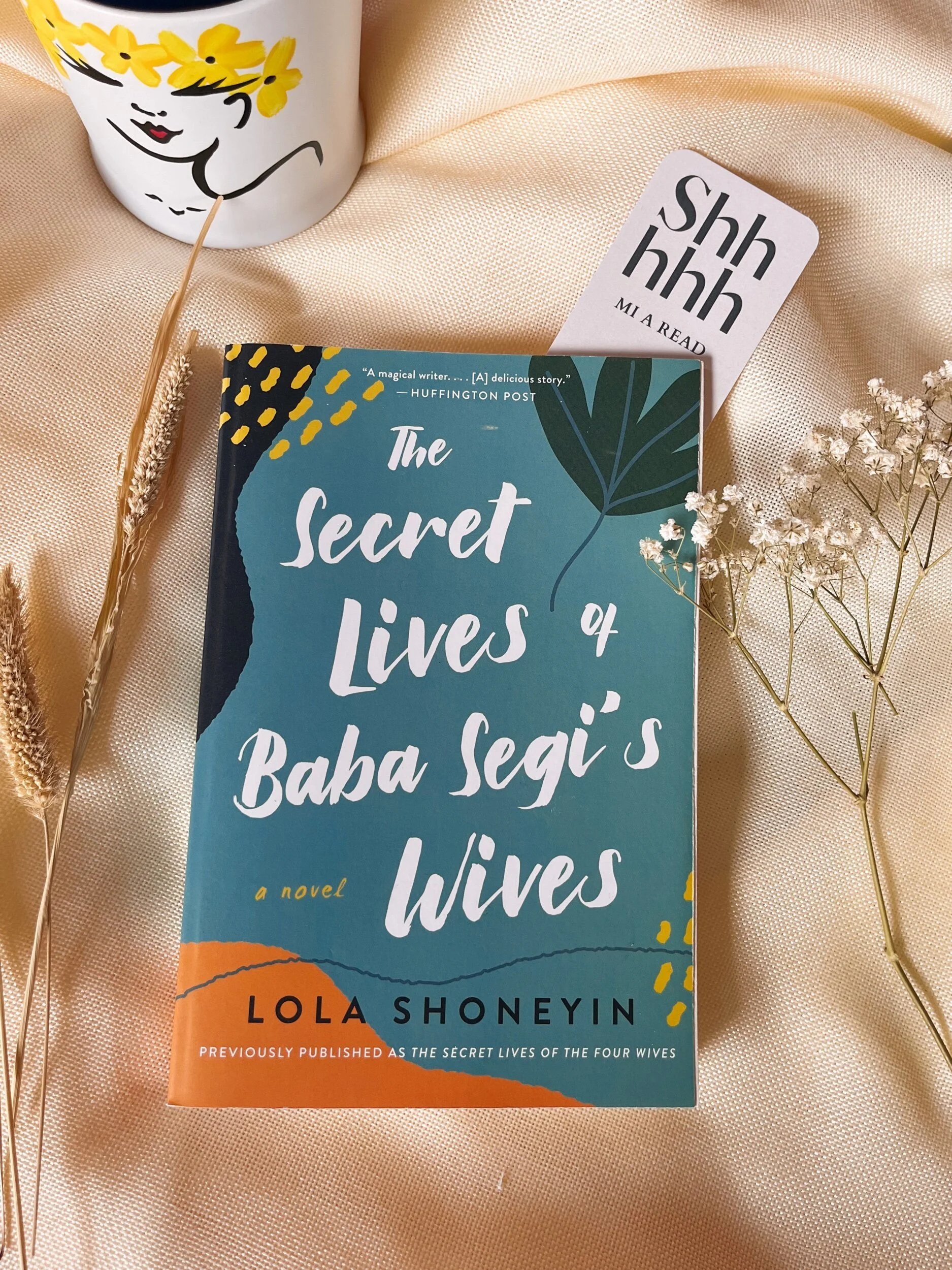
Like A Real Book Club: Episode 25- The One About The One About 'The Secret Lives of Baba Segi's Wives' by Lola Shoneyin
In this episode, Kristina and Ashley examine the tensions between ‘traditional’ and ‘modern’ family structures, love, hate, marriage, and of course secrets while reviewing The Secret Lives of Baba Segi’s Wives.
Listen to this episode on Apple, Spotify, Google Podcast or wherever you listen to podcasts
We’re reviewing our February book club pick The Secret Lives of Baba Segi’s Wives.
In this episode, Kristina and Ashley examine the tensions between ‘traditional’ and ‘modern’ family structures, love, hate, marriage, and of course secrets.
To support Rebel Women Lit's projects including Like A Real Book Club, become a sustaining member:

Like A Real Book Club: Episode 24- The One About The One About 'The Secret Lives of Church Ladies' by Deesha Philyaw
We'd ask if you missed us but we're pretty sure you did.
We missed you too and that's why this new episode is an extra-long one.
Listen to this episode on Apple, Spotify, Google Podcast or wherever you listen to podcasts
Get comfy and journey with us as we explore Rebel Women Lit's January book pick: The Secret Lives of Church Ladies by Deesha Philyaw. This masterful collection of stories was an immediate favourite of ours with its textured and hilarious stories, gorgeously written by Deesha.
We talk about the many layers and looks of grief; how parental relationships shape our lives, love, pleasure and how Jherane relates heavily to "How To Make Love To A Physicist".
To support Rebel Women Lit's projects including Like A Real Book Club, become a sustaining member:

Like A Real Book Club: Episode 23- The One About Augustown by Kei Miller
From hairstyles in schools to police officers playing football with guns on their shoulders, Kristina, Ashley and Jherane discuss the ways colonialism and all of his friends continues to be the foundation of modern Jamaica in their review of Augustown.
Listen to this episode on Apple, Spotify, Google Podcast or wherever you listen to podcasts
From hairstyles in schools to police officers playing football with guns on their shoulders, Kristina, Ashley and Jherane discuss the ways colonialism and all of his friends continues to be the foundation of modern Jamaica in their review of Augustown.
Start your chores, start your commute or whatever you usually do while listening to podcasts and chat with us about the not-so-fictitious happenings of Augustown.
To support Rebel Women Lit's projects including Like A Real Book Club, become a sustaining member:
Augustown Transcript
Jherane: [00:00:00] Welcome to another podcast from Rebel Women Lit where we talk about books and just about everything else I'm Jherane
[00:00:23]Kristina: [00:00:23] I'm Kristina
[00:00:24]Ashley: [00:00:24] And I'm Ashley
[00:00:25] Jherane: [00:00:25] So today we're doing a review of Augustown. Uh, we actually did this whole podcast episode already, but due to technical difficulties, we can't release that episode. And I actually. I actually do mean technical difficulties. The episode is just terrible editing, according to Kristina, so are going to attempt to doing this again.
[00:00:46] And hopefully we do as good of a job as we did the first time. And I probably didn't need to say that because you did not know that that episode existed. Uh, but yeah, so we're talking about Augustown by Kei Miller. We read this book in May and I really enjoyed this book and it seems a lot of people enjoyed it as well because it's ,to date, now, officially our biggest book club meeting, we had 78 people who were present throughout the whole thing.
[00:01:20] A lot more people signed in and then had to sign out. So I'm going to count the people who are there for most of the meeting and that'll be seventy eight people. So that was really cool.
[00:01:29] Kristina: [00:01:29] Um, what was the number for |here comes the sun?
[00:01:34]Jherane: [00:01:34] Was in the fourties is actually the bell hooks book actually was really close to here comes the sun.
[00:01:42] Yeah.
[00:01:43] Kristina: [00:01:43] I remember the book club meeting. I was extremely surprised to see so many people because previously we did not have that many people joining book club. And then that one day just see a whole bunch of people show up
[00:01:55] Jherane: [00:01:55] because people loved here comes the sun. They really did. Um,
[00:01:59]Kristina: [00:01:59] the gays really turned out,
[00:02:01]Jherane: [00:02:01] really turned up at Pegasus and like the cafe manager was like, well, what the heck is happening?
[00:02:07] Kristina: [00:02:07] Like, okay, you're going to have to move outside. This is too big for us. Yeah. But, um, so yeah, I'm going to do a small summary of Augustown. So Augustown by Kei Miller, um, centres the story of Kaia, who is a six year old who got his locks cut off. And what we experienced throughout this entire book, now is the, what Kei calls "Autoclaps" which is this series of really unfortunate events that took place as a result of that, um, that event happening, but also what Kei wonderfully does is that he ties several other stories together with this story, um, stories from the past mostly.
[00:02:59] And he, he does a great job of really tying this idea of injustice and justice, especially for a particular group of people, of course, black, poor disenfranchised people. And so we get to. We get to see the relationship between dispossessed black bodies and the State, as well as what justice and injustice can look like.
[00:03:28] So that is basically the summary of Augustown, a very poor summary, but I feel like the book has so much in it. It has so many parts, so many moving parts that you kind of just have to immerse yourself in it and read it to get it. So what were you guys's first impressions of Augustown when you read it?.
[00:03:55] Ashley: [00:03:55] I really liked it. Um, this was my first time reading a Kei Miller in its entirety . I have started and kind of abandoned.A lot of, well, The Last Warner Woman was the one that I started and didn't finish. Not because it's not, it's not any good, but because I just didn't finish it for whatever reason. Um, but this book was deeply poetic.
[00:04:25] Um, I remember reading a review that said, or maybe somebody said it and then it just stuck. But this, the description was that this was a poet's novel, but not in like a negative way.
[00:04:39] Um, just in terms of how rich the story-building is and how very vividly Kei paints pictures of the words that he's saying. Like I could see when he's talking about to the, the, the. The hill that has a scar on its face, for example. And I love that because as a Jamaican, you know, exactly, or he's talking about and you know, exactly what that looks like, which is always really great to be able to identify.
[00:05:15] Um, so I personally really liked it and would recommend it to anybody. I think it's a very, it's a very relevant book now. Um, given the context of just the increase in state violence and the increasing policing of black bodies, like Kristina would have mentioned and then the discussions around how and who can navigate certain spaces.
[00:05:51] So, um, yeah, all of that to say I really liked it.
[00:05:55] Kristina: [00:05:55] Uh, yeah. So Augustown was my first introduction to Kei Miller as well. I would have heard about Kei Miller before, but I think this was the first time that I really gave myself a chance to get into his work. And I thought it was just really so beautiful and I can absolutely get the idea of it being a poet's novel mostly because I think Kei writes in the way that Jamaicans, tell a story.
[00:06:25] So a lot of it reads like a story being told to you or reads like you sitting on your veranda with an older person, maybe. Which is of course, a scene in the book and hearing them retell a story from their past. So it felt a lot like that. And he has such an excellent way with describing a scene and describing a character beyond just, uh, the physical trait, um, but exploring them and describing them in a way that connects you to who they are and connects you to their story.
[00:07:04]I really loved experiencing that and experiencing it in the way that Kei writes it.
[00:07:12] Jherane: [00:07:12] I think I've read everything published by Kei Miller and I love what he does, not just because of the language and the being poetic,, which no one can ever deny or take away from him.
[00:07:25] It's amazing that he just has that talent, but I think he also brings a lot of sympathy to a lot of his characters . So even the characters that you really dislike you, once you spend time writing about them, you develop some level of understanding. And that's something that I really appreciate in Kei's books.
[00:07:47]The ability to create some level of sympathy, or even empathy at times with these characters that are very dislikable.
[00:07:57] So even the teacher will, at times I could understand where he was coming from, where Mr. St. Joseph's. Thank you. Even when he. Decided to butcher Kaia's head. You can understand where he was coming from. You can understand the level of self hate that drives someone to do that. I think in the hands of a less skilled writer, you will not be able to find sympathy or understanding for Mr.
[00:08:25] St. Joseph's. He would have just been very plain and simple, this wicked cruel villain in the book. And you would probably justify what happens to him in the end andsay, oh yeah, that's what he deserves. But because you have some understanding of this, man's self hate your question. Yeah. What it is that we should have done, or what is, is that we should do with the Mr.
[00:08:52] St. Joseph's of the world? As I'm saying this, I'm realizing if you haven't read the novel, you may be wondering what the heck did Mr. St. Joseph's do.
[00:09:02] Ashley: [00:09:02] Um, Kristina mentioned it in the beginning.
[00:09:05] Kristina: [00:09:05] Yeah. I don't think I tied it to a Mister St. Joseph's.
[00:09:10] Jherane: [00:09:10] Okay. So in the book itself, Kaia has locks and we are introduced to Kaia coming home and crying because his locks have just been cut off.
[00:09:21] Ashley: [00:09:21] Shorn .
[00:09:23] Jherane: [00:09:23] I like it when he said butcher it actually, I knew everyone in the book club remembered the "shorn" thing.
[00:09:28]Kristina: [00:09:28] This is my first time learning the word shorn, and when I read it, when it just
[00:09:32] came out, well,
[00:09:33]Ashley: [00:09:33] you mentioning that the last time we recorded.
[00:09:36] Kristina: [00:09:36] Yeah not ashamed.
[00:09:37] Jherane: [00:09:37] I don't think you should be ashamed
[00:09:39] Ashley: [00:09:39] That's what books are for
[00:09:40] Jherane: [00:09:40] exactly.
[00:09:42] Like if you're reading stuff or you're not learning anything, like what's the point
[00:09:47]Kristina: [00:09:47] as you were talking, I was here thinking that. It makes a lot of sense that Kei spent such a long time or gave any amount of time rather to exploring Mr. St. Joseph's background, because that wouldn't have been absolutely necessary or, well, you could see how in another book a writer might not have given us this entire backstory into Mr st. Joseph's life, especially as somebody who is considered to be the antagonist of the story, this detailed description of his experiences when he was, I don't know necessarily when he was younger, but just his experience growing up in rural Jamaica, his experience with the being partnered with a white Jamaican woman. You see the relevance or the importance of doing that or how critical that was to the entire story, because I don't think that Kai is necessarily trying to paint. Mr. St. Joseph's as a villain, we, as readers would see him as the villain because him cut off a pickney locs.
[00:10:57] Jherane: [00:10:57] He is, but that doesn't mean that villains --
[00:11:00] Kristina: [00:11:00] discarded like there is, or that they just happen. Right. Um, we see this experience of Mr. St. Joseph's as somebody who grew up in, I would say pre-independence Jamaica at the time, he would have been, he would have had a front seat to or well, unlike us who might not have experienced Bertish rule or direct British rule, I should say he grew up with that experience.
[00:11:30] And so he grew up directly being told that his blackness is.
[00:11:36] Ashley: [00:11:36] A problem,
[00:11:36]Kristina: [00:11:36] a problem that it's not a thing that it should not be in that through your blackness or, well, if you are a black, there's no way that you can make it in this world. There's no way that you can navigate private or public spaces with any sort of dignity or any sort of comfort within yourself.
[00:11:56] And so we get these glimpses of him trying his damness to escape that because he wants, you could say that he wanted more for himself. He wanted better. He sees what it means to be black in Jamaica and how that doesn't get you anywhere. And so we see these glimpses of him attempting to remove himself from that blackness.
[00:12:20] And he did it so well that he ended up. Not at all, not identifying at all with blackness. So he did not see himself as somebody who was black. He saw himself as far. Well, maybe he did, but
[00:12:36] Jherane: [00:12:36] no, he didn't.
[00:12:38] Ashley: [00:12:38] That was, that was one of the craziest parts when I was eating because Kei had, when, when he was exploring my St Joseph's, he had said, there's a part where Mr. Saint Joseph's is looking in a mirror. And can you just imagine the cognitive dissonance that you need to have to think, to look in the mirror and see the person that is not being reflected to see somebody who is white and when you're not to see somebody who is just like completely, you see a handsome person, you see a tall person, you see everything, and then that's it.
[00:13:18] You are an exact opposite. So that, that. That's insane to me. And then you just, it just makes you wonder how many people actually face that every day, the people that you just interact with it, or you feel like everything is fine, whether you know them or they don't know them. And it just, what, what are people thinking?
[00:13:36] What are going on in people's lives?
[00:13:38] Kristina: [00:13:38] It's a body dysmorphia.
[00:13:40] Ashley: [00:13:40] Yes, it is. Yeah.
[00:13:44] Kristina: [00:13:44] You just have no idea what you look like. And then this also is our room. Yeah. And then this is also a reminder again, of just the, the psychological impact of slavery and colonialism and imperialism and how that completely changes or affects your psyche and your sense of self, your sense of identity.
[00:14:09] Ashley: [00:14:09] It strips you.
[00:14:10] Kristina: [00:14:10] So, and like a lot of us assume that wait in the veranda chat, did he say that? Yes. The St Joseph's is queer?
[00:14:20] I don't recall
[00:14:21] Ashley: [00:14:21] him saying that,
[00:14:23] Jherane: [00:14:23] but it's kind of clear, right?
[00:14:26] Kristina: [00:14:26] He's queer.
[00:14:27] Jherane: [00:14:27] But, um, he there's so much self hate.
[00:14:30] Kristina: [00:14:30] There's so much self hate that, uh, when this white woman who also sees an entirely different person, um, she fetishize is him.
[00:14:42] She sees, no,
[00:14:43] I don't think she fetishizes him I think she romanticizes him
[00:14:46] I think it was a fetish because she was really in love with the, the revolutionary at the time.
[00:14:52] Ashley: [00:14:52] No, I don't think it's affective sheets because he never displayed any of those characteristics, but he
[00:15:03] Okay. So they're all going to Google and what can do that? Because I don't know that extra difference, but for me, I don't think she did it in a way that was. I think she, okay. I think it was selfish because she wanted to be a part of this revolution and this, this movement that she felt, I think she wanted to be a person.
[00:15:24] I think she really wanted to be a part of a Jamaica.
[00:15:27] She
[00:15:27] Jherane: [00:15:27] wanted to be the wife, someone who was in it. And for all the people that pick Mr. St. Joseph the opposite,
[00:15:33] Ashley: [00:15:33] but she wouldn't know.
[00:15:34] Kristina: [00:15:34] No, but that's what I'm saying. She, she, she has. Yeah, because she has an image of what the black revolutionary looks like.
[00:15:42] And I think there was a moment in the book where Kei describes that this sort of small Afro really dark skin. So she had an idea of who our revolutionary looks like, and he, he might not have been the most handsome, but he fit the bill in a way. And that whet her whistle.
[00:16:04] To the
[00:16:04] Jherane: [00:16:04] point where she didn't do realize he has the exact opposite in politics
[00:16:08] Kristina: [00:16:08] it took maybe not years, but it took a while for her to recognize that it wasn't until the cheating scene where she was like, huh, you're not who I thought you were like
[00:16:23] Jherane: [00:16:23] two things in there that I really like. I think Kei did what Toni Morrison took an entire novel to do. And that is to paint the idea of how trauma can affect black people's image of self. So in the bluest eye, Toni Morrison has Pichola. I believe that was her name. Yeah. Or she, her way of dealing with the trauma that she experienced was to imagine she had blue eyes or imagine herself to whiteness.
[00:16:50] And in the end it was so freaking creepy because when she looked in the mirror, she saw a white girl looking back at her. And that was her way of dealing with what's happened because these things,. In her mind don't happen to white girls. Um, Kei did that in like just a few pages and did even more because it's like, what does this person know?
[00:17:12] Behave like our own black people when they believe that they can be removed from black people. Um, and whereas we didn't see any direct trauma that happened to Mr. St. Joseph's he is the product of hundreds of years of colonialism and society telling you that your skin isn't worth much. And, one of my favorite lines in the book are one of my favorite thoughts in the book from Mr.
[00:17:42] St. Joseph was the cheating scene was when, um, Mary said, Mary just calls him a stupid black man. And he is so in shock, not that he's been dancing. To be called stupid was one thing to be called black was quite another. He could not accept this callus demotion back into what he imagined. He had been exalted out off
[00:18:08] Ashley: [00:18:08] A demotion,
[00:18:09] Jherane: [00:18:09] Demotion, because he thought now that he had a white partner. He would have
[00:18:14] Kristina: [00:18:14] Assimilation was complete,
[00:18:19] Jherane: [00:18:19] or it was getting somewhere. He was getting much closer to whiteness and this idea of whiteness. He's not even that concerned that his girlfriend, his fiance. Cause I don't think they got married is cheating on him in bed with someone else it's that she has called him black.
[00:18:38] And, and that has just, so that gives you a good idea as to what Mr. St. Joseph's is stepping into, as he moves to Kingston and he becomes a teacher.
[00:18:50] Ashley: [00:18:50] Well, I mean, even how he hangs on to certain labels, because when he was, um, interacting with the principal of the school in Kingston, he would always bring up the fact that he was a deputy vice principal or something like that at the other school in rural Jamaica,
[00:19:09] Jherane: [00:19:09] somewhere in Trelawny.
[00:19:11] Ashley: [00:19:11] I don't remember. Um, I mean, you always know people who are going to grab for like certain labels, whenever they're in conversation, then they're, they're going through something and you just need to, I don't know. They need to, I don't even know. I don't have any, I don't know how I would deal with that.
[00:19:30] Mr. St. Joseph's other than just trying to be calm. I think what the principal did was fair because she. Well, I mean,
[00:19:39] Kristina: [00:19:39] it seemed also that he always had some sort of complaint
[00:19:46] Jherane: [00:19:46] um, it's funny that you say that because one of the things I really appreciate it's about book club now. As a space where we meet and talk about things that talk about things that happen in these imagined worlds was how all the Jamaicans had that exact same reaction myself included, where we all know Mr. St. Joseph, you know, same way be complaining about something you have so much work doing. And you just hope that this man don't do nothing stupid. And you'll say, yes, sir. I mean, yeah. Just, just keep your head down and you do your work and you hope that this person is harmless. And it's funny to me because everyone who was in book club, that wasn't not even just Jamaican, from anyone who wasn't from the Caribbean.
[00:20:33] They saw that immediately as a red flag, that the principal did not immediately dismiss him or reprimand him for who he was talking about, about the students, about the way that they dress, their demeanor, the lack of respect, in his opinion, the lack of respect they immediately said, no, this man should not be around children, you should not be working or
[00:20:54] Ashley: [00:20:54] Those are the people who are around children the most.
[00:20:57] Jherane: [00:20:57] Exactly. So I really appreciated the book club space because for me as a Jamaican, it's just like, this is just normal work. And there were people from the UK was just like, no, he should have been fired immediately.
[00:21:12] I was just like, Click that that even clicked to me because it was just normal. And it's so bad that we have accepted this as normal. So shout out to the diaspora people who are in our book club for us to realize, yo, this shit is not normal. We should not be accepting this colonial school girl tings.
[00:21:32] Right. Cause he was just, oh my God.
[00:21:36] Kristina: [00:21:36] He was off like him a seh, no dem pickney here come inna di school and dem nah bade, which is probably a lie. Um, how them dress, how they look, how they're acting. Um, she was probably, they're just acting like children.
[00:21:50]Ashley: [00:21:50] I mean, he's teaching what, seven and six zeros. How are they supposed to act to they're going to talk in class,
[00:21:57] Jherane: [00:21:57] but they must be disciplined, silent,
[00:22:01] Ashley: [00:22:01] but it's, it's really scary because Mr. St Joseph's like we've said exists in so many spaces that especially children are a part of, and those people like Mr. St. Josephs are in high positions in those places too. So I'm thinking back to any sorts of high school, I'm sure. I mean, I have memories of, uh, school principals being -- up spot checks.
[00:22:25] Jherane: [00:22:25] Oh my God. That's just a normal thing. Like spot.
[00:22:28] Ashley: [00:22:28] And in our spot checks, we had to actually lift up our tunic show that we were, we're wearing a slipbut. Um, Marino or showing that we were wearing a marina.
[00:22:41] Jherane: [00:22:41] I'm sorry. So I went to school in a much colder part of Jamaica than y'all did in Kingston. Why are you dressed like that dressing as if
[00:22:54] Ashley: [00:22:54] you have to dress like that young lady,
[00:22:58] the
[00:22:58] garment show I'm wearing clothes. So obviously it's not going to show
[00:23:04] really share,
[00:23:05] Kristina: [00:23:05] I It wasn't it was not, it wasn't share enough where miss the case.
[00:23:13] not the punch line. So like
[00:23:15] when you open your legs and it's bright, want to see on the knees.
[00:23:20] Jherane: [00:23:20] So change the material,
[00:23:23] Ashley: [00:23:23] the problem is not the school. The problem is the student has to take on the burden of finding extra steps in order to not show certain things
[00:23:31] Jherane: [00:23:31] where you change the color of the uniform.
[00:23:34] If that's
[00:23:36] Ashley: [00:23:36] Jherane, how would they spot a Wolmer's girl?, Jherane, no institution. will not be embarassed by . Non-slip wearing students.
[00:23:48] Jherane: [00:23:48] It's so weird to me. Whenever I saw pictures of high schoolers in Kingston, like in the Gleaner and stuff like that. I'm like, why is their uniform so long? Kingston is so hot too. Why are these people dressed like this?
[00:24:00]Ashley: [00:24:00] I remember. Do you guys remember? So this was several years now when there was a, I think many, I don't remember what it's all-girls schools. And they had this policy where the skirt had to literally be at the ankle,
[00:24:16] Jherane: [00:24:16] what?
[00:24:18] Kristina: [00:24:18] It, holy childhood.
[00:24:19] Ashley: [00:24:19] But there were a few more schools.
[00:24:22] Jherane: [00:24:22] No, I've seen those pictures in the Gleaner. Cause I remember,
[00:24:26] Kristina: [00:24:26] oh yes, there was a time.
[00:24:27] There was a time when
[00:24:34] longer
[00:24:34] Jherane: [00:24:34] because there was a sweeping halfway tree though.
[00:24:42] what is that? What is that doing besides wasting material? What is that doing?
[00:24:47] Ashley: [00:24:47] It's teaching shame to the young students, especially young girls, because you are the problem. If something happens to you, it's, it's about it's rape culture but to institutionalize rape culture where you have. A girl who, I mean, nobody not supposed to be looking on
[00:25:10] and having no, no, you know,
[00:25:14] conversation with her,
[00:25:15] but knowing that's happening and the onus is on the girl to make sure that something don't happen to her when them don't know that. I mean, I don't understand. I don't, I don't think there's any thinking that goes into the policy because people are still going to that.
[00:25:33] That's not going to long skirts are not going to stop people from trying to engage in certain activities if that's what they want to do. You know? So it just, uh,
[00:25:43] it's just such a,
[00:25:45]Jherane: [00:25:45] maybe we should try the trendy thing of saying it's it's so not sustainable fashion. We should find ways. I don't know, because they just never like.
[00:25:57] Butyou can't even use that because obviously common sense does not exist in this arena. Common sense. It's not logical when it comes to dealing with, um, cause really it's policing. All of this is it's policing in the way that we normally think about police with the force, but it's also just policing bodies.
[00:26:18] It's policing presentation, it's policing, policing, the victims of these issues that we claim that we want to address.
[00:26:26]Kristina: [00:26:26] And then even not thinking about hair, no, connecting it to Kaia when there was a particular way that we had to do our hair to go to school or, well, there were conditions about how your hair can be combed. And so you can only wear a black accessories. Um, for most, most Jamaican schools, I think you can't wear braids, um, which is something that for a lot of blind, natural hair people, it has become sort of essential for us. It makes sense. It's very convenient, especially when you're early in the morning to get ready to go to school.
[00:27:04] All of that. There are so many,
[00:27:06] +so many things. And then for now, um, black students, the same rules today, and we see that a lot here in Jamaica, where there are stipulations for, for example, football. If you have Afro
[00:27:21] hair for it to be
[00:27:26] why
[00:27:26] is what those same boys will tell you that? Well, for a lot of non-black students who come to this school (Ashley: They can have shoulder length hair) they can have shoulder length hair, then can catch up them hair. They can do all sorts of things with their hair. And we come back again to ask the question, what is the rule? What is it the reason? Why is it only
[00:27:47] applicable to one set of students and not another, but
[00:27:51] then yeah.
[00:27:52] Ashley: [00:27:52] And the set that they're applicable to is the majority. So it just don't make any sense either
[00:27:57] Kristina: [00:27:57] The majority of your students half
[00:27:59] Ashley: [00:27:59] 99% of your population
[00:28:01] Kristina: [00:28:01] Are policed by this rule.
[00:28:04] Ashley: [00:28:04] And you're going to have the one percent to just do whatever they want. I mean, you know, it reflects society.
[00:28:13]Jherane: [00:28:13] Davey had tweeted. If you guys don't know, you should be following Lest We Forget the checkmate, and the checkmate podcast, Tennament Yard shout out to all of them. Davey, who is our unofficial historian of the generation. She doesn't know it. She had tweeted about the hair policy and the reasons why Afros were banned.
[00:28:36] It was directly linked to them, not wanting boys to lock their hair. So you couldn't ban locks in school. So the next thing was to say, you're going to ban Afros at a certain length because that would be the first step
[00:28:56] Yeah. So it's, we don't want more of these people would locks. So if you don't already have it, you can't start growing it too, while you are a here. It's so interesting to me, how much institutions are scared of any expression that links back to blackness and particularly institutions that today aren't policed by whiteness.
[00:29:17] It is black people who are now policing other black people because these ... yo Colonialism is so strong. It's like we picked up this rule and the rule works so well that nobody
[00:29:32] like w they have left, they've gone. And yet the institutions that they build continue to build police
[00:29:39] Ashley: [00:29:39] going to uphold
[00:29:40] the remnants of
[00:29:41] a remnant it's
[00:29:46] Jherane: [00:29:46] And it's, middle-class the Jamaicans who are responsible for upholding a lots of these rules. I don't see this level of direct policing of blackness in upper class versus which is very interesting to me. It tends to be people who are trying to assimilate. Upper classes and trying to find their way to the upper class and largely middle class people that enforce these rules heavily
[00:30:14] Jherane that reminds me, or I'm thinking, as you're saying this black people, when they get to those spaces, if they get to those spaces,let's say they're an exceptional black person, like a supermodel or whatever it is, ours, Usain bolt or whatever,
[00:30:29] they're
[00:30:29] Ashley: [00:30:29] glorified for just being black.
[00:30:31] Like they can't just be their blackest self and people, white people, people in those spaces look it up and it shows, but
[00:30:39] Jherane: [00:30:39] then it's other black people who made it to those spaces that police them. Because then you have, um, I hate to say this. You have Sean Paul's wife whose name? I cannot remember Jody.
[00:30:54] Who assimilated to these spaces who has some, if you look closely, you can see there is some blackness there who turns around and police Usain Bolt's blackness. Yeah.
[00:31:08] Ashley: [00:31:08] Well, I mean, it's different for her. I think her thinking is that when you look on me, I can't immediately tell that I'm black ,
[00:31:15] Jherane: [00:31:15] So I'm protecting this space from you people who are obviously black.
[00:31:21] Ashley: [00:31:21] And that's what that's where race comes in. That's why race is such a strict and rigid system, because those are, when you look on somebody, you can immediately tell based on race they're worth based on if they should be acceptable in certain spaces, if they're worthy enough to be in certain spaces.
[00:31:40] And I mean, we, we all know that as fucked up and that's don't make any sense and you need to really check yourself if this is what you believe, but this is how you uphold your own value by othering yourself from everybody else,
[00:31:55] Jherane: [00:31:55] protect the spaces that you think other people don't deserve. Right.
[00:31:59] Ashley: [00:31:59] The deserving is areally important because
[00:32:03] Jherane: [00:32:03] Usain Bolt I think he's a billionaire now.
[00:32:09]Ashley: [00:32:09] Maybe with that new ad, "Usainely Fast" tip him over in the billionaire club.
[00:32:19] Jherane: [00:32:19] But the point is that he is someone who can and has afforded to move into a lot of different upper class spaces. That many Jamaicans can only dream off. But these spaces, even though he is. Exceptional still top of his field, even after retiring, no one has come close to him.
[00:32:42] Yeah. Um, his wealth is magnificent yet. He's still not acceptable in those spaces that people feel the need to protect these spaces from him because he doesn't fit what we think someone in those spaces should look like or should act like,
[00:32:59]Kristina: [00:32:59] Now that I'm recalling that story with Jinx and Usain Bolt, it's almost as if there was an expectance that his behavior would change and that he's moving into a different kind of class and
[00:33:14] you need to be like us
[00:33:16] need to be different. No, you need to change your behavior. You need to change the way you engage certain things. You cannot come into these spaces with your same old dutty boogo yaga behavior.
[00:33:29] Oh, God cannot do.
[00:33:33] um, is the same kind of thing with Kaia now aware Mr. St. Joseph's cause Kaia is a light-skinned
[00:33:42] Ashley: [00:33:42] yeah. He's mixed race.
[00:33:44]Kristina: [00:33:44] Mixed race. Yeah. oh my gosh.
[00:33:49] Jherane: [00:33:49] In the Verandah Chat that he was thinking of someone that looked like Bob Marley when he was thinking of Kaia.
[00:33:54] Kristina: [00:33:54] Right. And so you have somebody like him now who a Mr. St. Joseph's would look out to him and say, you are
[00:34:05] future because he will call man the hell you call
[00:34:12] ed when you were
[00:34:14] blessed with this skin.
[00:34:17] Yeah, I am. And hair that actually curls,
[00:34:24] like he was so, so offended. . He's like, how dare you.
[00:34:31] definitely think that there is jealousy there . Like how do you taint.How dare you taint this gift that was afforded to you. Like you're not even did have fi try fi get it, yougot it. And here you are tainting it as a six year old. And I I'm, I'm mortified by the fact that you're doing this because so many people want this.
[00:34:51] So many people
[00:34:56] projecting all of us on that. All of the scenes that he talks or he's in it, I'm imagining like the sweetest child who is just, he just seems so innocent. So fused about what's happening. And he's just like, like
[00:35:14] Ashley: [00:35:14] this, his first introduction to the, the trauma that this world can read.
[00:35:19] Giving black people and inflict on black people. Yeah, because I mean that boy was minding his business, his little mixed business Now this dutty heart teacher waa come shorn off, the man locks like I'm so Kaia, Kaia, the Kaias of the world we got you, man. We see you and your boy, I don't know.
[00:35:42] Kristina: [00:35:42] I think now that I'm thinking about it again, as you mentioned, experiencing that kind of trauma, it's a reminder of how young black children, how by virtue of their blackness, they already entered into a space of trauma.
[00:36:01]Kaia is born in Augustown and in Jamaica. So that's already being born into trauma, but then you have this additional experience of, because of the way that you express yourself, which is very much, um, Identified with blackness or with Jamaica and blackness, I should say you now get this additional form of trauma, which he doesn't understand that his young age, he knows it's something bad, or at least he knew it was something bad cause he was crying for a bit.
[00:36:30] And then there was a moment where he wasn't crying, but then he was crying again because of course you're violated and this was weird and I'm young and I feel uncomfortable and I don't know what's happening, but this adult did something to me and I don't know how to process it. And you can just imagine him then having to grow up, uh, exhibiting certain behaviors or just not knowing how to navigate the world because of this trauma, because, and then he had the additional trauma of losing his parent.
[00:37:01] And so this it's just, again, this other reminder of how black children don't get to, they don't always get to experience the innocence and carefreeness of being a child of just existing and having fun and learning and exploring, and having your curiosity explored even more, you don't necessarily get that.
[00:37:28] You don't necessarily get to
[00:37:33] sustain that, you know, have to be hypervigilant or hyper-aware of your existence and Holt and navigate certain spaces. And it's just so fucking sad.
[00:37:47] Ashley: [00:37:47] I want to shift the conversation a little bit and talk about Bedward because, he's one of the main characters in this novel and. It's essentially it about him and about his influence on Augustown and Jamaica really, and how disruptive he was as a, as a character in that time period.
[00:38:10] Um, I would have learned about him in school, not in any depth, but definitely would have heard about the team and yeah. Yeah. That's usually the, the conversation around him and how him feel seh him coulda fly and him was able to influence people and whatever, but I was re- reading
[00:38:34] some pages yesterday
[00:38:36] and Kei was describing Bedward before he became Bedward and how he was basically, they are unremarkable man
[00:38:47] um, yeah, but also he was like, yeah, it was just supposed to say that not sometimes, apparently
[00:39:01] runaway
[00:39:05] yes. His wife, his wife.
[00:39:08] Jherane: [00:39:08] Yeah. And he raped someone. And it's interesting to me that we don't talk about the sexual violence with a lot of our leaders, generally, even the ones that we dismiss or the ones that we regard it's we kind of tend to just gloss over them. So I really appreciated that Kei wrote that into the book itself.
[00:39:33] It does. It did it wasn't something that what happened and yeah. So, yeah. Yeah. I think
[00:39:38] Ashley: [00:39:38] it's important. I mean, Christianity likes to paint the picture of once you have your born again, then that your old self is no more, but that's not the reality of the situation. You don't just put a band-aid on
[00:39:53] exactly. It's not accountable at all because the person, okay, so Bedward now is known as this, uh, this, uh, um, leader, this spiritual leader in some space, in some spaces. But to, I mean, he, he must have been really people who knew him intimately like his, his children or his family, his girlfriends too. Um, must have been, I mean, just to have that too, again, that disonance between this person who people are revering now and then transitioning into being a preacher's wife.
[00:40:28] I don't remember her name,you remember? When, when she saw him floating for example, and she had to be the person to kind of like start building up some sort of something following, well, maybe not following, but just like, uh, she was building something.
[00:40:56] basically his PR person. And just to, to go to go to that from being in a, almost an abusive relationship with somebody that's challenging and that's really burdensome on that's
[00:41:10] Jherane: [00:41:10] the experience of
[00:41:11] Ashley: [00:41:11] so many women, the man just gets up and he's had some sort of gift or some sort of calling and you just have to follow him through
[00:41:21] Kristina: [00:41:21] when you also just have to bury your trauma.
[00:41:25] The idea is that this person is our husband or your common law husband, or just your long-term partner. And so what happens within the confines of that intimate relationship is allowed. It's not something to be challenged. It's just a part of how you experience that particular relationship. Yeah.
[00:41:47] Jherane: [00:41:47] And also you do it for the cause.
[00:41:49] So you have
[00:41:51] Ashley: [00:41:51] idea, you have to abandon all the affiliates,
[00:41:53] Kristina: [00:41:53] uh, as a, as a Christian leader, you have to do your part. You have to be the help me, you have to be supportive. You have to abandon your, your personal concerns, your personal issues, because now, this is bigger than you.
[00:42:09] Ashley: [00:42:09] Yeah. And I think that's really unfair.
[00:42:12] And when we talk about justice, it, yeah, justice should be for everybody, like Bedward's wife. And people who Bedward would've wronged in his past life, they deserve justice too. Like what kind of. I don't understand it. How does he atone for those sins?
[00:42:30] Jherane: [00:42:30] He does. It doesn't need to, because no one is asking him to no one.
[00:42:35] Well, the people who started knowing him as Alexander Bedward, as this prophet, as this man of God, I don't know your past. And even if I did know your past or know something different and you are know somebody who can speak to my needs or know somebody who can speak to a core part of me that needs, uh, needs someone to tell me that I'm capable.
[00:43:01] And that I have the ability to do a thing because our own that time people, the people in Augustown according to the book, they were desperate for that. They were desperate for somebody to see them as human beings see them as people of dignity and worth and possibility. And then here comes this person who is.
[00:43:21] Telling me that this is possible or showing me that it's possible through his own actions of being able to fly.
[00:43:28] Ashley: [00:43:28] I just don't understand how or whole bed ward was selected, basically because God, yes
[00:43:37]Jherane: [00:43:37] I
[00:43:37] Ashley: [00:43:37] just don't get it because it talks about how he was inflicted by this illness that would just have him vomiting blood all the time. And then he went away and then it left him and then he came back and the illness came back and then it was just following him for years. He was just. Oh, okay.
[00:44:01] I don't really know details or like biblical stories, but maybe it's like a job
[00:44:05] Jherane: [00:44:05] thing. If he was being tested,
[00:44:07] Ashley: [00:44:07] I don't get it. I just don't understand. Like you mess up this person's life for him. Health is shit. And all of a sudden he's just, and then, I mean, this was, but there was a lot of buildup from before because there was somebody else who had prophesized that somebody else is coming this, I don't remember
[00:44:25] Jherane: [00:44:25] Sounding like a pagan Ashley
[00:44:29] Ashley: [00:44:29] If I'm a pagan is just so it go because I, I don't, I don't get it. I don't understand the selection
[00:44:34] process
[00:44:35] Jherane: [00:44:35] the same way you don't understand the selection for any other prophet for any other religion is just what you believe. It's just which, which, it's always interesting to me where we draw the line between, I don't understand their religion, but I'm going to respect it versus "this is a cult"
[00:44:54] what the heck and all of those weird lines that we draw between what religion is.
[00:44:59] Kristina: [00:44:59] You can thank sociology
[00:45:00] Jherane: [00:45:00] because for me they're all the same, but I get to see someone who stays on the outside looking in, it looks the same, but if you're inside and you're looking at something else, it might be like, okay, that is strange.
[00:45:17] Ashley: [00:45:17] Yeah. Because Bedwardism was definitely considereda cult
[00:45:20]Jherane: [00:45:20] The class, distinction, between you could stay in your Catholic church and you decided that these were the rituals that were okay. You're going to put Ash on your face, you're going to do the communion and drink the water and all of that baptized in your church.
[00:45:34] That's fine. Get baptized in the river. That's not fine. And it was all of these demarcations that whether or not we want to admit it was drawn based on class, based on race, based on what we thought was worthy enough to be considered a religion. But at the end of the day, it's just, yo, do you believe this guy is a prophet?
[00:45:55] Why, why do you believe that person in that book that you're reading was a prophet, but not that guy who is doing more or less the same thing
[00:46:02] Ashley: [00:46:02] and who is actually in front of you versus a book that was written and how many years ago by God knows who you don't know. And interpreted and translated in so many different languages and so many different ways, like, you know, mostly don't and realize there a shit ton of interpretations of the,
[00:46:23] and there are lots of political interpretations of it and political reasons.
[00:46:27] Kristina: [00:46:27] I mean the king James version, it's a political, there's a political reason behind it.
[00:46:33] Jherane: [00:46:33] Well, one of my favorite parts about the whole Bedward story in the kind of thing that just felt. So Jamaica to me was the whole bottled water thing. Lots of people were being healed. And so the government sent someone to go test it.Yeah
[00:46:51] . And then they're like, oh, see, it's not magic. There are actual healing properties in there. It's like, oh, this is why we know
[00:47:02] he knew it. He intrinsically
[00:47:08] the government and had to use scientists and do tests, but Bedford just needed. I was like, oh, this is the most Jamaica.
[00:47:19] Kristina: [00:47:19] I'm glad that you brought. Bedward's past though Ashley. Cause I'm now also thinking, it brought me to thinking about it. There's several pastors here in Jamaica who have been, um, accused of sexual misconduct and the how, their churches and their congregants, protect them, protect them and stand firmly behind them.
[00:47:47] I remember I'm remembering 20 15, 20 16 with that Moravian pastor and how it wasn't until years later, I think that the church issued a kind of apology.
[00:48:00] Ashley: [00:48:00] Really? I didn't see that .
[00:48:02] Kristina: [00:48:02] If I remember correctly, it might've been 2019 or maybe I'm remembering incorrectly, but for the entire period that he was accused and charged, they were strongly behind him.
[00:48:14] They were strongly for their pastor and it really speaks to.
[00:48:19]this unwavering belief that they had. And now I'm thinking back to the people in Augustown in the Augustown book and how their belief in Bedward was so unwavering, and so grounded that it became the thing that made him fly. If you remember that scene, where on the day when he was actually supposed to fly and he was in the tree and while he was, he was floating up a bit, but not going very far.
[00:48:52] And then the, when the governor general sent in the troops or soldiers at that point, he started to sink a lot and it wasn't until Ms. Guilty. And I don't remember what her name, what's her first name. But when Ms. Gill's even started to sing when the, the crowd started to reignite their, their belief in him, because they had started to stop believe because the state came and of course, where the state imposes themselves, it creates a lot of fear and tension.
[00:49:22] And so now, and doubt, in yourself and doubt in Mr. Bedward. And then when they started singing and started coming together again, that was the thing that sort of made him not sort of the thing that made him float again. And I'm thinking now of power and how power works, especially for people like pastors who are able to get away with things or not get away, but they're able to do unsafe, very harmful things and very, very violent things to people, but they have an entire source of.
[00:50:03] What would you call that energy? They have an entire energy source and an entire group of people who are able to keep them lifted, not even backative, but just keep them lifted, keep them grounded in their power, keep them some, yeah,
[00:50:22] Jherane: [00:50:22] it's such a dark interpretation and I love it because it, I love that it can go either way in terms of it being a source of the community can be there to uplift you to do miraculous things.
[00:50:36] And once you have that community support, you can do anything, but it also means you can do anything at all. Um, so I appreciate that. It kind of brings me to the question. That's still been on my mind throughout Augustown about accountability. And what does it look like for us to hold people accountable outside of a judicial system.
[00:50:59] Um, is it possible for us to hold people accountable outside of like judicial system? What does that look like? When the state's idea of justice is very punitive carceral and does a lots of, a lot more harm than good from what we've seen, or I don't know if it's more harm than good, but it definitely does a lot of harm to communities like Augustown..
[00:51:24] What are the alternative ideas we have our own justice. So you brought up Bedward, who was, it was sent to Bellevue asylum as a form of punishing him for the influence that he had over people.
[00:51:41] Kristina: [00:51:41] Yeah, his audacity.
[00:51:43] Jherane: [00:51:43] Treated as someone who was insane and that in itself helps to take away any credibility, any momentum that he was building with the people in Augustown.
[00:51:53] So that was one example of how the state decides to hold people accountable. But also how, how could, how do you hold Bedward accountable for the violence that he did in his private life? And what does that look like? You don't have to have the answers. What does that look like? If you don't have state intervention, what does that mean?
[00:52:16] Um, what if they just say, well, that was the old me. I'm now born again. Like, is that enough for a community? When does a community decide that? Okay. Bedward, we know that you did something really horrible. And the person we believe that this person who says that they've forgiven, you has actually forgiven you.
[00:52:35] And you're not just brainwashed into thinking that. And thenalso to Mr. St. Joseph's, how do you find justice? How do you find accountability for someone like Mr. St. Joseph's? And does that accountability only lie in a state system or you can't it do anything or you tried him with assault.
[00:52:53] Yeah. You could charge Mr. St. Joseph with assaulting Kaia or do you go
[00:52:57] down there and deal with him yourself, but that's not that's
[00:53:03] or plan to do? I think, I think as a people, we don't have the answer. We don't know. I don't know how many, I don't think we have any very good examples of actual conflict resolution where both parties involved or people involved feel like they are satisfied with the outcome. And that's something that we, as the years go by, as, as we start to think about re-imagining or to, uh, the police system can look like and conversations around defunding the police, which it's not happening
[00:53:40] locally, but just, we love police here.
[00:53:44] Not we at
[00:53:45] Ashley: [00:53:45] Rebel Women Lit, but a
[00:53:47] Jherane: [00:53:47] hashtag force for good.
[00:53:50] Ashley: [00:53:50] You can stop me with this video on twitter when you had the policemen with them, AK 47 playing football.
[00:53:57] I'm not going to make
[00:53:58] any, like, how is that supposed to
[00:54:01] Jherane: [00:54:01] you have the compound they're like, if you put on a gun, then them thief it and I'm like... you are right, but also, do you see what the heck I'm sure this video could have gone another way where y'all are shooting these kids so
[00:54:18] Ashley: [00:54:18] accidentally or not,
[00:54:20]Jherane: [00:54:20] or are you planting these guns on the all the time, but we've normalized the idea personally, I have no problem with guns as a person.
[00:54:31] I know that people will have offense or that whatever, we can have a discussion, but to have a state that tells people that this is normal. Is this completely okay for the police to be playing a role and children at the same breath? They could not kill
[00:54:55] same people who are liking and sharing those videos a little bit. The same one who are saying, yeah, mine cause up here had gotten man lived there and blah, blah, blah. If it is that the police had decided to just kill one of them there, no accountability in that area. There's more accountability in the state.
[00:55:11] Even though we, I think to some level we should be controlling what the police does. Yeah. We just don't and we take whatever they say as gospel because they, they protect us. And by saying us, I mean, people who are in my class, people who are middle-class people who look like me, who talk like me for the most part, the police protects people who are like me until they decide that they don't want to, but we're okay with that.
[00:55:42] Oppressing other people, because we don't need to know the details as to where they get their power from or what they're doing, because they're doing it supposedly in our interest. It's okay.
[00:55:54] Kristina: [00:55:54] Something interesting when the, when the protests were happening in the United States last year, last year, summer around the death of George Floyd, it of course filtered across the world and Jamaica was no exception. And I remember, I don't know what had brought it up, but you know, people are saying something like defund, the police couldn't work here in Jamaica, but the reason they said that is because while the police are already underpaid, why would you want to take more money from them?
[00:56:26] Which I find very interesting, because what it did was it missed the point of this entire idea, our own defund, the police, which is, we need to think about other ways of. Conflict resolution in our communities, other ways of holding people accountable. And I just don't think that we have allowed ourselves.
[00:56:48] We here in Jamaica have really allowed ourselves to imagine what our communities can look like without police. I don't know if we trust community members to be able to handle situations like that by themselves.
[00:57:07] Ashley: [00:57:07] And how can you, when you have so many communities across the island that are under resource that are just neglected, neglected, I mean, would the recent rains that just happened?
[00:57:19] We barely missed the, um, hurricane or tropical storm Elsa. And literally we got the outer-bands of this really bad storm, according to international news. And there's so many places out at Bull Bay and
[00:57:37] Jherane: [00:57:37] displaced then isolate the entire
[00:57:40] Ashley: [00:57:40] place, flood out bridge, wash weh house wash weh and we literally got zero rain.
[00:57:47] I mean, I mean, I'm being hyperbolic, but no rain compared to what could have happened. It was not even a category, anything hurricane con amount of flooding that happened on our major roads and in communities, when you have that happening, how do you even begin to think about what your space or what you world can look like without the systems that have already been set up for you?
[00:58:14] You can't, you only think about survival and that's why police in certain places. Or in our country, like Jamaica will always be relevant because they uphold the system that we have, we have made up and it's sad and well known. It's not sad. It's depressing. And, um, I don't know. I don't know what we need. I don't know what
[00:58:40] needs to happen.
[00:58:41] Kristina: [00:58:41] I, well, as Jherane said, we don't have the answers and we might not have the answers for a little while, but it it's worth thinking about, survivors of say sexual trauma, and I think about what support for them looks like outside of the state, because how we understand our laws and our court system, it's not.
[00:59:10] How they're designed. They're not designed to , one to protect people who are harmed. They're designed to dole out to punishment for people who are harmers, and they're not designed to necessarily rehabilitate or to curb or change behavior. That's not what any of our laws do. And if, and we honestly can't really depend on our legislative bodies to transform the law that way, because one to get any sorts of a bill passed to become a law in Jamaica is.
[00:59:53] A tedious task. And so it makes it even more urgent. It makes it even more necessary for us to think about and only think about communities. We don't necessarily even have to just think about like physical environments or physical spaces. Think about the people who you are in community with the people who you consider to be your friends are people who are valuable to you, who you engage in daily.
[01:00:18] How can we start there to think about systems of accountability, frameworks of, um, not forgiveness, but like, how can we, how can we discuss harm, like real harm and how can we discuss it in a way that sees us not discarding people? And I know that that's extremely difficult for a lot of us to think about.
[01:00:46] I'm not saying I'm even there yet. Um, but. If again, if we're thinking about as somebody like a Mr. St. Joseph's who is a product of colonialism, a product of, of deep anti-blackness within a country. If we know we know all of the reasons behind why someone like him would become how he became, how do we address that?
[01:01:13] How do we ensure that the other people who are like him, because there are many like him, how do we ensure that the people who are like him, that we can not have anymore? And how can we ensure that these people don't result in Or, well, that their actions, the result in another Kaia or in another, in another Gina, because what happened to Kaia is what became Gina's fate.
[01:01:40] So how do we, how do we curb that? How do we prevent those things from happening? How do we. Do that within ourselves, because we also have to accept that the state does things within its own interests. It's not necessarily thinking about you as a dispossessed person, as a marginalized person. It's not necessarily thinking about how it can make your life any better.
[01:02:05] As Ashley said, we saw the one bag of flooding that happened, um, over the weekend. And then I saw a cartoon from Clovis that made me so exhausted. Cause it it's, uh, it's a cartoon of a man in like him house, and like him house flood out, you see a bunch of, um, like litter in other water and it's like Lawd Jesus, look how mi house flood out because of my own doing.
[01:02:29] And I'm like,
[01:02:30]Well, the government's machine is so good. Like it's made government machine, because again, it feels like we impose these things on ourselves. So yes, there are people that litter in Jamaica and litter, their surroundings. We're not going to pretend it wasn't happening. But we're also not going to pretend that natural disasters are something you can control.
[01:02:53] So if a landslide happens, it's not because someone, . Also many communities. There's not a proper garbage
[01:03:06] trucks are coming like
[01:03:07] Jherane: [01:03:07] once a month and we come home multiple ones. We don't need to blame. I don't know. Don't understand. Server is drawing that a person's mentality.
[01:03:21] Ashley: [01:03:21] I don't always get the green light every single time
[01:03:24] Jherane: [01:03:24] because it's and people talk about provocative. People are always having discussions about media companies.
[01:03:32] Don't sell the news. They sell engagement, which is why every single time to be in a tweet, something stupid. They don't care. They're getting great. It doesn't have to be true. It just needs to, no one can Sue me for this and people are going to engage in it because if they did do the news, it would have much more boring news.
[01:03:53] It wouldn't have nicer news would actually have actually balanced news. It wouldn't just be, these are the horrible things that happened today in chronological order. So yeah,
[01:04:05] Ashley: [01:04:05] it's maybe, maybe that's a part of our accountability, um, in terms of, because you just said the whole engagement thing, you engage in, it just, it reminded me of when people say there's no such thing as bad press, because people are talking about you
[01:04:24] anyway. Maybe if we just ignored people and ignored systems, that's how we hold them accountable because they're losing something.
[01:04:35] Jherane: [01:04:35] make it less profitable until that happens. It's not going to happen. Yeah. It's
[01:04:44] Ashley: [01:04:44] a, I don't know, so crazy world, but I want to go back to Mr. St. Joseph's wife a likkle bitbecause
[01:04:52] Jherane: [01:04:52] Mary was her
[01:04:52] Ashley: [01:04:52] name.
[01:04:54] I didn't remember. I
[01:04:55] Jherane: [01:04:55] don't remember any creative torturing me. Um, but
[01:05:02] Ashley: [01:05:02] I'm still, I don't know why I'm batting for her in this weird way, but I still feel like she wasn't fetishizing him
[01:05:10] Kristina: [01:05:10] Oh I found a thing about fetish. sure
[01:05:18] I had it.
[01:05:19] Ashley: [01:05:19] And then we moved on and
[01:05:22] yeah, I feel like the way that she was describing her growing up, growing up in our time in Jamaica, in the seventies, where there was all of these, like
[01:05:37] Um, ideology and movement, and it seemed to be a deeply intoxicating time for so many people. I think it was a time where people were genuinely free and curious about the exploration of their own blackness. Um, what's I think now that we're talking about, maybe it could borderline fetish because it's the first black person that she saw connected with it.
[01:06:04] Kristina: [01:06:04] Fetishization can be thought of as the act of making someone an object of sexual desire based on some aspect of their identity. I
[01:06:13] Ashley: [01:06:13] don't think. Okay. So I don't think she came, I don't think her, her attraction to him was sexual at the beginning.
[01:06:26] Jherane: [01:06:26] I just, she
[01:06:27] Ashley: [01:06:27] was sexually attracted to what? Not necessarily
[01:06:32]Kristina: [01:06:32] yeah. He, he looked like what she saw revolutionaries to look like that is something that she's attracted to. I dunno, I can't not think of it. I think it's just that romantic say it's just a trendy attraction.
[01:06:47] Ashley: [01:06:47] I dunno. It was the way that Kei
[01:06:51] described.
[01:06:52] It was definitely that whole chapter to me was just like, I don't understand it because she was so messy, but
[01:07:01] Jherane: [01:07:01] you know, in the best way possible. So here's one thing I don't like about Kei Miller books. Um, Kei can cannot write sex. It is always so awkward, even when I don't think it is meant to be awkward. And I think he knows because Kei Miller is so descriptive in everything, he does everything he writes about.
[01:07:22] He goes on and it's very vivid, very clear until he has to write to sex and it's like one sentence. And then I came, saw it happened, this happened. And within this fine, when it's like awkward, but at, at times when it's not supposed to be awkward, I'm just like, please don't do this again.
[01:07:42] Kristina: [01:07:42] Do you know if it's intentional for him to be awkward with the sex?
[01:07:47] I find sex. Very awkward. So, but I don't think like, I think at one is cracked. So those are awkward about the sex about
[01:07:58] all the time in all your books. It's just kind of like, I can tell. This scene needed editing those to him? I don't think so. Cause he reads me on Eros and Leon Eros. She writes sex very well. So I don't know. all the things, I don't know if, I don't know if it has anything to do director. I don't know who I'm not saying any of that.
[01:08:26] I'm just saying if there was one thing I don't like about Kevin it's that, cause every time I get too sexy and I'm just like, let's move on. This is not, this is not, this is, this is if you're listening to this, just why, why are you listening to this? What is wrong with you? Just, you know, step your sixth game up a bit more about sex.
[01:08:52] Yeah. I don't know. Are there, cause he writes to awkward sex. Good. Cause you feel awkward when you're reading it, but then Ben sees just like with what's his face on what's this.
[01:09:04] With
[01:09:04] Jherane: [01:09:04] the rest of mine, the rest of man moody and Clarky is the car that was sufficiently awkward. Yeah. But it was also like I get it, but because it's intimate, it's so much of what it's not said about the relationship, about the relationship, about queer relationships, generally in Jamaica, where you're just like, I don't know if that happened or not, or we're not going to talk about it because we obviously can't talk about it.
[01:09:41] So I'm not saying that that wasn't bad. It was awkward. I can, I think he just writes different brands off awkward.
[01:09:54] yeah, it was like, oh, we feel something, but we don't know how to express it. Is this a way I thought we should express this? It's just so it's like an intimate awkward, and it was awkward with the age difference. It was awkward with the gender. It was awkward with just the, what was happening on the outside society.
[01:10:14] So that's like an intimate awkward. And then you have the funny, awkward with, um, miss the St. Joseph and Mary, but then you have the wrong, awkward would miss the St. Joseph's wife raping him. It's just like if he's writing sex, it's just some level of awkward. I wasn't a good, awkward at Gina and Matthew.
[01:10:37] When they were just Houston, it was like, okay, we're teenagers. Maybe that's his brand. I said, Brian, you know what, maybe it's not something I dislike. It's just something I've noticed all of his sexism categorize, which kind of awkward it is, and then accepted in the moment. Yeah. Any final thoughts? No final thoughts.
[01:11:02] I'm just really grateful for. All right. So that kind of Milla and every other right to like Kim Miller, because I really enjoy, uh, reading Caribbean novels that feel like a story being told to me, because I think that's just really quintessential Caribbean way of expressing everything for us. It's a story.
[01:11:25] Everything for us is a huge event and I really appreciated that. And I also just love that. I love writers like Kim Miller, who. Ask a lot of questions, but don't provide an answer or they aren't trying to provide an answer. But what they are doing is asking us to think a little bit more about these things.
[01:11:49] Ashley: [01:11:49] I echo Kristina's sentiments. I think it was a really great book in terms of the richness of it. The it's just vivid. You can, you laugh in it. You can shed a tear in it. You, it stopped provoking. It's a book that you can recommend to a lot of different people. And it would be something that they would come back to you and say, Hey, I really enjoyed it.
[01:12:18]So if you've never already, I think you should check it out and tell us what you think, tweet us and tell us what you think about it.
[01:12:33]Jherane: [01:12:33] , so thanks for listening. Um, you can ask, she said, tweet us, send us an Instagram message, but also if you really, really, really, really, really want to help us out, leave us a review and share, share the podcast with a friend.
[01:12:49] As we all know, we listen to other people when they recommend a podcast to us. So send it to somebody send this episode or another episode to somebody that you think would like this. If you enjoyed Augustown, or if you enjoyed this, listening to us, chat about everythingaround the book, let us know and share it with a friend.
[01:13:09] So. What do we normally say for me? I think that's it.
[01:13:13] Kristina: [01:13:13] No, no. Become a sustaining member.
[01:13:17] Jherane: [01:13:17] Nobody nah do that clearly,
[01:13:19] Kristina: [01:13:19] no, because you reach 20 out of 30, that's important. Just become a sustaining member. There are lots of things that Rebel Women Lit is doing
[01:13:30] Jherane: [01:13:30] also things that will be done with all their podcasts. That will happen soon. I'm shouting , because I'm making a point, there's a sustaining number, so we can do other creative things as well.
[01:13:52] Byee!
Read Across Jamaica Day and Our Reading Culture - Like A Real Book Club: Episode 22
A short discussion on Jamaica's reading culture, Read Across Jamaica and how the Jamaican libraries are... kind of a mess. Who's up for a #JamaicaReads campaign?
Hey beautiful ones.
One of our favourite kinds of literature is poetry. Its ability to hold the weight of histories, the gamut of human emotions and philosophies in a mere few lines is just *chef's kiss*.
Now we’re not saying we’re poets...but much like poetry, this new episode is short and sweet. For National Reading Day (celebrated annually on May 4th), we talk about the barriers to a loving relationship with recreational reading and how the national library service's weird rules to owning a library card is a part of that problem (and of course so much more).
It's the perfect episode to listen to while you detangle your hair or make yourself some breakfast.
Stay Lit 🌷
Transcript
Jherane: Hi, welcome to Like a Real Book Club podcast, where we talk about books and just about everything else I'm Jherane.
Kristina: Kristina.
Ashley: and I'm Ashley
Jherane: And today is read across Jamaica day . So I know last couple of years they've had a lot of politicians going in schools, reading to kids, and a lot of corporate branding reading to kids. And it's been interesting to see what that looks like now that we're in a pandemic.
And I think it's a really good initiative. I wish it was sewn through the rest of our policies with regards to having more people are reading all the time and not just children. Did you guys know that today was Read Across Jamaica day?
Kristina: I knew that it was today. I know that it's something that we have, regularly. I agree with you that it's a really great initiative. A part of me does cringe at the PR element of it, but I guess I understand why something like that is important. If you see one of your favorite persons participating in something like this, it might Get you a little bit more interested in it. What are some of the activities that they've been doing?
I'm curious about how kids receive days like this I'm curious about what the interaction is like generally. And if an initiative like this actually does increase the interest in reading among kids, and if anybody is doing that kind of data collection
Ashley: Well, I have one anecdotal experience. I went to my dressmaker today and she has a nine-year-old daughter . And usually when I go there, she's in her school uniform and today she wasn't So I said, "Hey, what's going on? You didn't go to school today?" Because she has to put on her school uniform to go to school over zoom.
Anyway she told me that today was Read Across Jamaica day, which is cool. I didn't know before. She goes on to tell me that somebody read them abook. I don't remember who she said, read her the book. I don't think it was like a public figures Jamaican celebrity, but she went in as a lot of detail about the book, because I told her to tell me what she remembered or tell me about the story.
And it was about the story of the boy named Peter whose grandmother told him never under any circumstances t o start on fire and him never listen to her and it will start a fire and almost bun down the house so she took me through, she was talking for about 20 minutes very animatedly about the story. I feel like that was, sort off a success. I don't know if that would have motivated her to read the book, but I know that the story in particular she was super excited about and was able to talk in great detail about, so that was really great to hear and see how excited she was.
Though, I will say that. I think she kind of took this day as like a 'free day'. So, I mean, they didn't do their usual school things and she wasn't in her uniform. So I guess maybe she was at least a bit more relaxed, but. I mean, maybe that's not so much of a bad thing because reading should be comfortable and it shouldn't be this rigid thing that you only with school
I mean, I like that. I like that it was pretty casual. Yeah, so that's how I know that today was Read Across Jamaica Day.
Jherane: I think that's pretty cool. Cause I think what I really like about it is that it calls for people to be animated with books. So if you ever witness them, it's huge Jamaican storytelling style with the books and the kids are excited. Even if they don't know the person, it's someone, who's not their teacher, who's coming to talk to them.
And they're excited about
Kristina: exciting.
Jherane: so exciting. I just wish it was a bit more normal or like a bit more frequent.
So we've been having, inadvertently having discussions on Twitter about the library service here in Jamaica. I didn't know how inaccessible the library was. Like I knew the library resource issues, but I didn't realize how a lot the policies they have in place makes it inaccessible.
So apparently kids can't get library cards in Jamaica.
Kristina: Which still blows my mind.
Jherane: Yeah. So your parent has to take out the book for you and there's a limit to three books. So someone just tweeted their account to say that they have two kids. All of them are readers. So she's, a reader, her kids are readers, but by the time she gets them books and their kids' books, they don't last very long.
So they can only check out three books. She gets three books for her kids. By the time they get homethe book done . So you need a TRN to get the book for those who don't know, that's a tax registration number in Jamaica. You need to get you need a proof of address, whether it's a utility bill or you need a JP to certify that you live somewhere.
None of this makes any sense for me. Why are we making it harder for people to read when it's not today?
Kristina: While I was observing that conversation, I wrote about the library that you were having onto it. It made me wonder how accessible, isn't the word, but how. Normal libraries are for some people. Cause I was thinking to myself that when I was younger, the only library that I knew of was the library at my primary school.
I wasn't aware of the, or maybe I was aware of, but I didn't think that it was something that I could visit. I don't. I think the first time I actually visited the library was in high school
Ashley: Some sort of field trip?
Kristina: No, I think I visited it in high school. Actually I think during the fifth form when we're studying and preparing for CSEC, I think that was the first time that I actually went and visited the library and saw what it looked like.
But as I'm trying to recall my understanding of library being a place that I could actually go to, to sit and read books, I don't think that I had that idea. In my head, I'm trying to figure out why that was for me reading, books, meant, reading, whatever my brother had at that time.
So sometimes those were, the Hardy Boys books, and sometimes those were his textbooks that I just randomly tek up and read because it was there. Or I remember in primary school Because we used to have vendors outside. And sometimes there were vendors there who had like random books about very random things and they were selling them for cheap.
And I bought them on that. So, you know, I'd get books to read, but I don't recall really knowing and understanding the library as a place that I could go to for recreational reading. My understanding of library was this big place that was sort of far removed from me. It was something that felt adult yeah, it didn't feel like something for me, if that makes sense.
yeah that's been something that was on my mind while I was thinking about how inaccessible it seemingly is. Or the different barriers that are in place that can affect so many people who would be interested in going to the library and just picking up books to read.
Ashley: I totally agree. The library that I would have the most access to would be Tom Red Ca m Library and anybody who's (Red Cam). Right? Yeah. So it's like right beside Upper Park Camp.
Kristina: Little Theatre,
Ashley: and Little Theatre and-
which interestingly, so I used to go to Little Theatre to dance and it never occurred to me that it was right beside, Little Theatre either.
Jherane: Oh, no.
Kristina: Nope. Nope. Nope. Which is very sad
Ashley: Because it's like, it's such a tiny space. I mean, I used to go there sometimes. But that would be, it wouldn't be to read recreationally. It would be to do - -I know that I used the meet up there to have extra lessons, Spanish, extra lessons a few times, and then to do some sorts of research for school.
But then I'm thinking about and maybe I'm reading it or looking into it too deeply, but in terms of you see how institutions like the Library Service in Jamaica shows you. Like how deeply routine we have or class issues, because who are the types of people that go to the library?
People who I know what's the type of, well, not necessarily energy, but in terms of the type of people that other people expect to see in the library and send to the library. They're usually people maybe who come from a working class background who may not have access to certain services like internet.
And so they all have to share a communal space and there is absolutely nothing wrong with that, but I know definitely that growing up,the type of framing around using the library that I would always hear is It's very, almost negative in a way where it's like, yeah, just go to the library.
If I'm trying to explain, I don't know if I can explain what I'm thinking about, but you only expect certain people to go to the library. And I'm thinking about my relationships with libraries in general. There was a library at my high school and it's not somewhere that I used to go a lot to like, just sit down and read recreationally or even when I was at UWI. I mean, I'm go to the library to do work, but I'm not just going to chill out there. And just, that's not my spot where I go on. And just browse the aisles and read. And I don't know if that has more to do with me as a person and the type of activities that I gravitate towards or what libraries is like an institution mean to people in the 21st century.
But I know that especially, maybe in a secondary school system, people who seek the services of public libraries, there is like a class imbalance. And I think that the playing field kind of levels a little bit more when you go on to tertiary education, because there's some things that you need at a library that you can't access anywhere else.
I mean, will strengthen whatever it is that you're trying to research on. So everybody kind of just uses it. But yeah, a lot of memories memories of me being at Tom Red Cam Library and just seeing droves of school-aged children. It's a place that people go to just hang out and get away from their house and.
I don't know if it's necessarily read and you meet people and you hear stories about things that happen at the library. I think that's the people who operate it too or managing to, there is like a disparity, especially with the age gap, because they're young people who are accessing the services of the library.
People are very quick to dismiss because they assume that every young person who goes to the library doesn't really go to use it in a way that they think should be used.
I didn't see the conversation that was happening, but I hope that those types of topics are sprinkled in because there's a lots of like judgment, especially by older folk towards younger folk who want to have access to the library.
Kristina: I was here thinking about that class analysis that you brought in. And I wonder if that's mostly a Kingstone thing. Cause I feel like the people that
Jherane: No, it's not.
Kristina: Okay. Okay. But I definitely agree with you though
looking back now, I'm kind of wondering What kind of perceptions do we create nationally about libraries? And I guess about reading in general. So for a day like this Jherane had mentioned earlier that it would be great if it was an initiative that wouldn't be on children and yeah. Why not?
What is the The barrier or the reason behind not making it a general thing or a thing that targets adolescents, adults, senior citizens, just literally everybody what is the thing that prevents that-
Jherane: cause we don't actually care. I think it's easy to tell children to read because in your head it's like, "Reading is the future, blah, blah, blah, blah, blah." But the idea of you doing it for yourself, of you nourishing yourself with knowledge, feels like "I don't have enough time." And that to me is a problem because if it is that you, aren't going to do the thing.
Don't tell other people to do it,
Ashley: either people don't read at all, but they're telling the younger generation to read or what they do read are just books that are about getting ahead. And I know we've spoken about this to some degree in various podcasts and also meetings book, club meetings.
But I think that there is something to be said about people who only read self help books. I just, I don't know that we're all striving for improvement to be a better version of ourselves. But if your only concern is to grow your capital and to be the leader of our group, or to influence people,
I don't know how you can actively try to encourage somebody else to read about like, just recreationally, because those are not the type of books that we're reading to our children. We're not telling them that there is a, these are the 10 secrets to excelling at primary school, or like this is a self-help book to my kid. Or whatever. I don't know. But I just sit
Jherane: Don't give them any ideas.
Ashley: Oh yeah, I shouldn't. Right? But then I'm thinking about where the
transition comes in. Like, Oh my God, man. What, like what happens when or where is the transition between, I get to read about a really interesting story about fire and this little boy not listening to his grandmother.
And then all of a sudden I'm only expected to read about to. Growing, getting ahead, and growing capital, stocks, and whatever it is.
Jherane: Jamaica has a hustle culture. America has a hustle culture as well, and that is the dominant culture in our media. So there's just this weird rush, this anxiety around making money, making lots of money and surviving is really hard. But then there's this added culture of, if you're not.
Hustling or if you're not looking at ways to improve your hustle, then you're wasting time. And it's always such a culture shock to go to other countries where they don't have a hustle culture, even amongst working class people. There's this understanding of this need for rest. CS does our thing. Closing businesses, if it's too hot or too cold is a thing, not because of.
Poor infrastructure . But just because the conditions are not ideal first to be working and we don't have that Jamaica very much has a hustle culture. So if you're going to be spending your free time reading, it should be to improve your hustle. And I get that. I just think it's very sad.
I think it's sad that we haven't recognized that. And I think that as adults we won't be able to fix the gaps in our reading culture if the people who are involved in these initiatives themselves, aren't looking at their peers and saying, "Hey, you should be reading as well."
Kristina: Yeah. Yeah. And that's probably the major issue with why nationally we don't do more encouragement of adults reading recreationally. It's like after, after that childhood age where you're already learning to read, so this is the best step to, to. Continue to push you to read more.
But after that, after schooling age, after a tertiary education, and you're now thrown into the rat race and it's a fight to survive. And so the predominant thing that you're thinking about now is all the different ways that I can survive. That looks like
Jherane: Building your brand
Kristina: Exactly like exactly that it looks like building your brand.
It
Jherane: monetizing your hobbies,
Kristina: about... mi no know whatever people be doing, but that as well as
Jherane: nothing wrong with that. It's just that's the
Kristina: it's the only
Jherane: thing
It's like a burn-out recipe
Kristina: and I'm kind
of changing my mind around self-help. Not that I want to read self-help books, but I get why people are reading self-help books.
Life is hard for one, but also, people are looking for ways to to exist within the system. They're looking for to continue within the system and maybe even try to quote unquote, "beat the system".
Jherane: And hack life
Right? Exactly.
person
Kristina: to beat it too. So, so I get running to these things.
I may think that they're just empty feel- good platitudes, but those things are extremely empowering for people it ties into the continuous race, always being on the hamster wheel. Always having a new, innovative idea, et cetera, et cetera.
Ashley: Yeah. I totally agree with Kristina
Everything gets dropped when you get to a certain age or you get to a certain point points in your life where you nuh bodda wid dem ting deh no more. You're not allowed to like, or you're not encouraged to explore and to think outside of the box and to expand your horizons outside of current events and self-help and getting rich, like there's no encouragement to do more and to read more and be more.
And I think in about maybe it's a Bible verse, or maybe it's just a religious quote about to "when I was a child, I did childish things when I became a man I had to put down my childish ways." I don't know if that's a quote. Don't come for me, religious people, but just in terms of like, why is reading considered childish?
Why is it that it's considered a childish and why is it that we're only promoting it to children. Because it's primary school children too. I'm hard pressed to find any sorts of like newspaper articles or pictures of them in high schools. And if it's the high school it's in the lower schools, still at 15 or 16 and under that is encouraged to read everybody else over
Kristina: I mostly sit I'm with yeah. Mostly sit them with primary school age children, or I don't recall seeing photos of them in high school. They probably do go to high schools, but I don't know. But in the same vein. So while I was what I'm reading and trying to finish My Fishy Stepmom, I was thinking to myself that this book is such a great way to keep a Caribbean mythology alive such a great way to pass that on to younger generations.
Cause I'm thinking now about whether. Or what's our oral history. What's the word? Oral history culture, maybe. What that looks like for us here in Jamaica and wondering if that's still a vibrant sort of thing, where grandparents great grunt aunts, just older people in our families, whether they still share these stories and share these Different myths and folklores.
I'm trying to recall if that exists now, because I can remember in like primary school, we used to have those little, those really flat books.I don't know who used to give them to us, but I remember a lot of those books with a lot of Anansi stories. I remember learning about the White Witch of Rosehall from one of those books.
And this woman that turned into a cat one bag a sumn and I'm very curious about whether we have children's books, that center Jamaican folklore now. But yeah, this book makes me very curious about our oral history, oral tradition culture here in Jamaica.
And how vibrant that is right now. If that's all
Jherane: I think it's a mix where all lots of people are moving towards documenting it, and people are still keeping the oral tradition alive. Just before we wrap up. Cause this is supposed to be a really short episode
Kristina: I was looking at the time
Jherane: as long as have to be a bit Clare that, my ideas around toRead Across Jamaica thing is not about Read Across Jamaica, per se, it's just, our attitudes towards the culture of reading. I think we target it a bit too much on children. I get why we do it because you're supposed to build a habit, but then it just kind of drop off very quickly after
Kristina: doesn't become a regular
Jherane: which means. Yeah. It's for a particular age group and then we move on .
Ashley: Definitely not a coincidence that it's in May because
Jherane: it's education month yeah. Or education week?
Ashley: And child's month.
Kristina: All just a campaign
Jherane: yeah.
Kristina: as in like, not even just that, nothing, not
Points and activity play.
hopefully reading becomes a lifestyle. Like, I don't know, maybe they need to make it a trend off sorts.
Ashley: They need to start a campaign like Jamaica Moves.
Kristina: That would be
Ashley: Jamaica
Kristina: cool.
Jherane: Jamaica Reads
Ashley: So everybody in Jamaica Reads exactly.
Jherane: yeah, I'd be done for that. That'd be really cool. Really nerdy in all the best ways.. I'm looking forward to a change in our reading cultures.
So if you're listening to this episode for the first time, that means you are not a sustaining member for Rebel Women Lit, and you are missing out on opportunity of supporting the work that we do at Rebel Women Lit, which includes our own private library that we send via mail to people and a bunch of other things that we do.
So become a sustaining member, you get early podcast episodes and you get a bunch of other really cool free things like free yoga sessions with us every month. .
, and if you like this, Podcast episode or love language is words of affirmation. Please leave us feedback. Send us a tweet, send us a message on Instagram, tag us. If you're listening to if you have any thoughts about what we're saying, please share it. We'd love to have this as a dialogue and share with your friends to subscribe
Kristina: Follows across your social media
Jherane: Yeah, we have really interesting conversations on Twitter, such as this sometimes are funny on Twitter. Well, I think,
Kristina: talk about books and everything else. Just like the podcast,
Jherane: Bye. See you at the club!

Interview with Jacqueline Bishop About The Gift of Music and Song - Like A Real Book Club Podcast Episode 22
Podcast Interview with Jacqueline Bishop about The Gift of Music and Song
Listen to this episode on Apple, Spotify, Google Podcast or wherever you listen to podcasts
Journalist, poet, novelist, artist, (and now archivist) Jacqueline Bishop recently released her first collection of interviews which focuses on documenting the craft and lives of 13 Jamaican women writers, in The Gift of Music and Song.
The Gift of Music and Song is an intimate account that engages monumental Jamaican Women Writers in the context of anti-colonial and anti-misogyny praxis in the country and the politics of Jamaican women in literature, research and publishing. This beautiful collection features interviews with Olive Senior, Lorna Goodison, Marcia Douglas, Hazel Campbell, Velma Pollard and many more. Kristina and Jherane talk to Jacqueline about the process of creating these books and the reason why we all have a responsibility to archive.
To support this show and more work like this, become a sustaining member of Rebel Women Lit today rebelwomenlit.com/join#sustaining, you can also shop The Gift of Music and Song in the Rebel Women Lit show.
Episode Transcript, made possible by our sustaining members.
Kristina Neil 0:00
Hey everyone. Welcome to “Like a Real Book Club,” a podcast from Rebel Women Lit where we talk about books and just about everything else. I'm Kristina. For this episode of the podcast, you'll be dropped into an interview with the brilliant Jacqueline Bishop – stellar interviewer, writer and archivist, as dubbed by Rebel Women Lit, where we talked to her about her collection of interviews, “The Gift of Music and Song: Interviews With Jamaican Women Writers.” We hope you enjoy this episode as much as we did.
Jherane Patmore 0:32
[Have you] gotten to that part of the book yet Kristina about Elliott bliss.
Kristina Neil 0:38
Not yet.
Jherane Patmore 0:39
The Elliott bliss was the first one I read because it, I'd never heard of her. And I thought I knew everyone, or at least knew of everyone. (laughs) Or, like, I've heard about these people before, even if I haven't read their work, this was really blew me away as this person that obviously would have such a great interest in terms of what I do, in terms of what I'm interested in. I've never heard of her. So…
Kristina Neil 1:08
Thank you, Jacqueline.
Jherane Patmore 1:09
Thank you, Jacqueline, for doing that. Thank you for bringing her to light, or even more into the light, into the spotlight. Yeah, I guess we could start around there. How this body of work fits into the work you want to do as an artist. Why did you feel compelled to put this work together?
Jacqueline Bishop 1:31
First, I want to say thank you for having me on the programme. And I want to thank you both for the work that you do. Rebel Women have gone on to establish itself not only in Jamaica, but as a brand abroad as well. And just about everybody knows the organization now. It's in major magazines. Everybody talks about it. It's quite an honor to be asked to, to be on the program. So thank you for so much for the work that you do, and for prioritizing and the voice of women so often in the work that you do. So thank you so much. I don't know too many organizations that I would get up for at one o'clock in the morning in London to do an interview with. So thank you so very much. Of course in thanking you, I think I've totally forgotten much of the question that you asked, but perhaps, Yeah, a good place to start is with Elliot bliss. So many people are interested in Elliott bliss, and who she is. I was, too, quite surprised when I met Michela Colorado. We met more than two decades ago. I will never forget the meeting. I myself was starting a literary magazine, Calabash, a journal of Caribbean arts and letters. At the time I had just about finished graduate school at NYU, and had gotten summer teaching gigs, some kind of teaching gig at NYU. I've pretty much stayed at NYU for a very long time. I'm still at NYU. And she came up to me. I'll never forget. we met at the library, Bob's, in front of NYU, and she's telling me about this woman who was a writer, Jamaican white Creole, and also lesbian in the, the turn of the century 1800s, early 1900s, Jamaica. And I just thought this whole thing was a, quite a fictional thing, tale that she was telling me, that I was sure that this could not be. I thought this was fable. And she had published books that were out of date, and she had been working on Elliott bliss for quite some time. I am so happy that last year her “Biography of Bliss” got published by the University of the West Indies Press. And, so, Michela is one of the people that was interviewed in this collection, The Gift of Music and Song, speaking about who Elliot Bliss is, the work that she has done, and her contributions to, to Jamaican literature and women's literature. So, she's here as well. And maybe you can ask your question again, and I can get to answer it.
Jherane Patmore 4:30
(Laughs) No worries. Question was: tell me a bit about yourself, the work that you do and why you thought this particular collection was important for the body of work you're creating, the legacy you want to leave behind.
Jaqueline Bishop 4:46
So, thanks for the reminder. So, you know, to be fair, I didn't envision the interviews as a book when I started out doing. The interviews spring from seven several sources. One is my own interest in the interview is a form. This is an interest that I've had for several years now. Trained as an oral historian at Columbia University that has found form in a book called “My Mother Who Is Me: Life Stories from Jamaican Women in New York,” when I, when we had Calabash up and running. I tried to involve interviews in that publication as much as possible. And I think there's one interview in this book from my Calabash days, but then Sharon Leitch, and I, Sharon Leitch is the editor of the book and section at the Jamaica Observer. I used to publish, I would publish an interview every now and again in the book hand section of the Observer, most notably Hazel Campbell, who we lost not too long ago, and we got to talking about the lack of interviews for women, in particular, Jamaican women specifically. And so, one summer about, several years ago, five, ten years ago, we did a series of interviews that went over quite well. But then about three, four years ago, we did a series of interviews with Lorna Goodison, among others. And that did extremely well. And so we decided to continue doing these interviews. And in addition to focusing on Jamaican women, we broadened it to a little bit and did Caribbean writers as well. Now, even then, it didn't occur to me that this was a book. I was very just very, very pleased, and Sharon was too, to just be having the voices of these women in a national newspaper and speaking to as broad an audience as possible in Jamaica. And you know how it is, anything that's locally Jamaican is national and international. Right? Jamaica is international, it's just how things are with Jamaica. And wherever I would go, people would mention these interviews to me. And after a while, people kept calling for a book, a book. And the publisher, People Tree Press, eventually reached out to me and said, did I want to make these into a book? And that's how this book came together. I've continued, as you probably know, doing these interviews, and so, I hope that there will be a book two of Jamaican women writers interviews.
Jherane Patmore 7:54
Also…
Jacqueline Bishop 7:55
I hope I answered.
Jherane Patmore 7:56
Yeah, you did. Also, a quick apology. I thought you were based in New York, when I had set the time, because I knew you're still at NYU. So I thought you were based there. I'm so sorry. I did not mean to have you up at 1AM. I'm not… yeah
Jacqueline Bishop 8:16
NYU, has campuses in London, they have campuses in Italy, in, all over the place. And so for the past three years, I've been based here. I am going back to the states in May. just about all these interviews that I've been doing, or people who have been setting meetings with, everyone thinks I'm in New York, actually. But I'm actually in London. Yeah. So the second part of your question is, how does this fit into the larger project of what I am doing? And, I don't think I consciously set out to do some of the things I do but, but when I look back, I think that they unconsciously connect, and that I prioritize certain things in the work that I do. Among other things that I prioritize is the untold story. And I prioritize women's voices. And I think that those things really come together quite forcefully in this book.
Kristina Neil 9:26
I'd love for you to talk a little bit about what the process of coordinating such a book was like. And you also spoke about, there was a desire from others for you to put these interviews together into a book. Why was it, was it important for you for a book like this to be created, for a book like this to exist with these voices? So what was the process of putting this together and then your interest in having such a book like this exist? Oh God, I hate the internet so much. I was asking you about your, Yeah. So, I was asking about your, the process, the process that you went through to coordinate such a book and to compile a book like this with all of your interviews, as well as your own, your own feelings towards why such a book is important, why the documentation of these women writers is important for us to have?
Jacqueline Bishop 10:28
Actually, it was the first part of your question. It was quite, it wasn't as difficult to put the book together, because in so many ways, Sharon Leitch had done so much of the work already for me. So, I mean, I had done on the back end, I had done so much of the work in reading these women and formulating the questions and getting the interview done. But on the, on the front end, Sharon did a lot of work in editing the interviews and getting them published. So compiling them wasn't, wasn't that that difficult a process. The second part of the question is a more nuanced thing to have to deal with. And I'll give you an example of what I mean by this. Before Hazel Campbell knew that this book was in the works, Hazel Campbell knew what the cover of this book was going to be like. And we had discussions about this and so forth and so on. But Hazel Campbell died before this book was published, and his handbook was in the process of dying, as this book was in the works, and I don't know of too many interviews with someone like Hazel Campbell. So that says something of the importance of this book. Because Hazel Campbell is one of our best short story writers. Hazel Campbell, she has been personally very kind to me as a younger writer, but she has nurtured untold amounts of other Jamaican writers, including Garfield Ellis, who has since died as well. So she has contributed enormously to Jamaican literature. She as well was, she's, she's been instrumental in many areas of Jamaican arts. And in some ways, this book rests on the shoulders of Hazel Campbell, in so far as we became Facebook friends, and it was a bit of an overwhelming experience for me because I, I had read Hazel Campbell when I was much younger, and trying to find my way as a writer. She was one of those writers that I read. And I had seen her on Facebook talking about books that she had published, and that had just been completely overlooked in Jamaica. no one was reviewing her books, no one was talking to her about her books, she was just completely overlooked. And so, I took the opportunity to interview her about these books. And that interview not only made its way into this book, but something she said about wanting in the next life the gift of music and song gave the title to this book. And there are women in this collection, who have an international reputation, and I've been interviewed in other places, but more often than not, that's not the case here. And I think of the Trinidadian writer, Monique Ruffy, when she was talking about this book, she said, I bet people do not know that there are so, there's all this abundance of talent, you know, of female talent in Jamaica, there's been so much of an erasure of women's voices as writers. And this is why a book like this is important. It is important not only to document these women, but also what goes into the making of their works, right? What they think about their work, you know? And it is particularly important because we tell not one of us are going to be here forever. But hopefully a book like this will go on and on and on, and give witness to the fact that we have been here and we have been writing. So there you go.
Kristina Neil 15:06
Thank you for that. And as you said that I was thinking to myself that I'm actually glad that we're able to have this interview with you. Because this too is documentation.
Jacqueline Bishop 15:17
Yes, yes! Absolutely. Absolutely. Absolutely. You know, this, this in and of itself is documentation, right? It's significant, that it's documentation by other Jamaican women who are saying, we are interested in our country women. this is important. This is very, very important.
Kristina Neil 15:41
I mean, I can't for Jherane, but one of my favourite things about Rebel Women Lit is the commitment to women's voices, specifically in the Caribbean, and queer voices. And I don't know if she'll hate this, but leaving a legacy behind in terms of, in terms of just the importance of engaging these writers, because they're just so important to not just our cultural production, as Jamaicans and people living in the Caribbean, but just in our lives, they say and do so much in terms of documenting all of our experiences.
Jacqueline Bishop 16:22
Okay, let me just let me just address that for a moment. Another part of the reason why I am in the UK is that I have many, many, many, many, shameful to admit, many, many, many, many, many Master's degrees. It's embarrassing how many Master's degrees. I'll never admit to how many I have. But this is the first PhD that I'm doing. So, I'm here doing my PhD as well. The archive for black women's voices is this big, right? Trying to dig through the archive to find black women's voice is a problem. And the more we go back in time is the smaller and the slimmer it becomes, right? So this is not, this is a very, very important thing to try and make an archive for voices of our thoughts, right? Because it's not that many that is there, right? It is a very small thing, right? So, and every day, as I sit down before this dissertation, I lament all the things I will not know about black women, because it is not in the archive. So let me just say that.
Jherane Patmore 17:59
I feel like you're speaking to my soul right now. A few years ago, I was in a used bookstore and I saw this book by Hazel Campbell, and I had never heard of her before. And I picked it up, and I read it. And it was brilliant. And I Googled, I could not find much about her. And then I found another book, Singer Man, I found and I read it, loved it. No one was talking about it. I don't even think, if I remember correctly, it doesn't even have a Goodreads page. But there was nothing I could find about the author, about craft of what it takes to produce these stories. And then, and I just thought it was very tragic, because I didn't know anything about this writer who created these brilliant stories. And I thought I probably never will. And then I saw about your book came out with, and I didn't know the influence Hazel Campbell would have had on you as a writer or the significance she would have had in this book. So, thank you so much for doing that. Thank you for using or creating space for these other writers, because I think it's so important to document this. And we, we obviously both agree on that. But also, I think what you do as someone who not only writes, but I think someone who also has an interest in craft is that you focus a lot on that, the actual process of writing, the history of that. So, I'm curious about the technical aspects of your interviews. How do you prepare for them? And what made you think “this is the conversation I'm going to share with the world” because I'm sure you talk to these writers a lot. So I'm always curious about when you decide “This is the conversation we share” versus “This is the private conversation that we have. How do I determine what enters the archive?”
Jacqueline Bishop 19:59
Actually, I don't talk to them a lot.
Jherane Patmore 20:02
Really? I just assume all the writers talk to each other all the time.
Jacqueline Bishop 20:05
Some of them I have personal relationships with. But in terms of the interview, I don't talk to them a lot, you know? And there are writers, one of the things that people complain about my interviews, the writers complain a lot, is that the questions are very, very hard. This is, you know? and I actually just had someone who refused to do an interview, because she's like, the questions are very hard. And I think she just didn't want to engage with. Listen, an interview is not about saying how wonderful you are, and just like, rubbing you down and this is just, you're just so great and so wonderful. An interview, at least, as far as I'm concerned, really engages with the idea, I try to engage with the ideas in your work. And sometimes I, in doing so, I might spot things that you might not have spotted in your own work, I am thinking of an interview that I did with an author, really esteemed, I really like him a lot. And he said, “Why must your questions be this hard”. But he went ahead, and he answered them anyway. And sometimes authors just don't want to engage with the ideas in their work, you know? Because it's looking at the omissions in their work. And it's looking at very untidy things that they don't want to engage with. I'm assuming some of the very things happen in my own writing, right? And people can call me on, on various things. So, so there's that they… Let me just say something about Hazel Campbell and craft. There was no more solid person than Hazel Campbell on craft, right? she was the mistress of craft. I don't know how much in future years, we will, someone will do a biography or some kind of PhD on Hazel Campbell, and we will get to know how much she has really worked with writers on their craft. She has transferred this knowledge to others. But I can attest to the fact that Hazel has looked at, and made better, much of my own work. She has had a lot of discussions with me on craft, right? And Hazel ran workshops and trained generations of writers very quietly, right? And made works so much the better, and so much stronger. And I hope that others will come forward and talk about the ways in which Hazel did this, right? I really hope that they will. And that this will become part of her legacy as well. Right? Because she was, ahm, so solid on this, she was rock solid on this. And speaking of sometimes not wanting to get the, the kind of feedback you got. Sometimes she gave me feedback that hurt my feelings (laughs). But it made me into a better writer. And the interesting thing about Hazel is she did this all very quietly. So thanks for this discussion on hazel, right?
Kristina Neil 23:50
Thank you so much for sharing your history with Hazel Campbell and just how much of an amazing person she was, and writer. So while I was looking through this book, and looking at the sort of questions that you asked, it just feels like you have a great interest in the background of the writer, their history and everything that's fundamental to them. So, I wanted to find out from you. If, if it is that you feel that the core of the person determines the kind of story that they write and how they tell their stories and just why is it important for you to really show the humaneness of the writer even while engaging with their work?
Jacqueline Bishop 24:32
A bunch of the people that I interviewed, my sense of it were, was that they said, they took the opportunity to really, I feel lucky because they, they took it that they, overwhelmingly in the interviews people took the process very seriously, right? You look at an interview with someone like Pamela Mordecai, and what you get is not just Pamela Mordecai’s personal story, but she wraps her story in a history of Kingston as well, right? So you come away feeling I not only know this person, but I know Kingston. I know a little bit more about the city. That is, you know, the cultural history of Kingston. So, this is my philosophy about an interview, and how what an interview functions and what it is that an interview is supposed to do. An interview, in Jacqueline's world is supposed to illuminate a body of work, right? it tells us something about the work. And it tells us something about the person who made the work, right? Where does this work come from? Right? So, you get a sense of what this work is about. And it really works best if the, the, the person themselves, is surprised by things that they did not know about their own work, right? So, all the people who are getting pissed off by the questions, I like that, because there are things about the work that you did not know, right? And, of course, I try never to be disrespectful to anyone, and, but this work comes from somewhere, it's coming from somewhere, right? So to understand where the work is coming from, you under… you need to understand something about the person who created the work, right? So to understand my focus on women, for example, you have to understand that I had the most phenomenal grandmother, ever, right? And, and I had a pretty good mother too. But my grandmother and I, it was exceptional. And, and my grandmother would take me to the small district, my family, my maternal family's from this small district called Nonsuch, and they were all, there was a grandmother, and there was a great-grandmother. And there's my mother and all these women who were doing all these fantastic things. Now, I think it's important, at first I thought I couldn't see as clearly as I can see now, how much of what I create comes from this, comes from this world. So, I think that to really understand Lorna Goodison, and her focus on sewing in her works, you have to understand that her mother was a seamstress, right? And a really good one, as well. And that's why I try to do two things in the interviews. I try to get readers to understand. I try to get the interviewee to talk about the work. But I also try to get them to talk about where the work comes from, which is to give us something of their biography.
Kristina Neil 28:32
It's really interesting that you mentioned that you like when the authors are pissed off by your questions. I was messaging Jherane today that while reading the interview with Olive Senior, it felt so much like she was just not, she was just not here for your questions. And Olive was just not interested in answering or well, the types of questions that were being asked. You were very insistent, especially that question about violence in Jamaica. I was like, mmhmm, okay, you were very insistent that she give you a response to that question.
Jacqueline Bishop 29:07
I don't know if you saw the book launch, the wonderful book launch, that the University of the West Indies, the department of Literatures in English, did. And Tanya surely pulled out certain moments in that particular interview and talked about it as well. It's quite interesting. Of course, congratulations to Olive for being the new “Poet Laureate” of Jamaica.
Kristina Neil 29:34
Absolutely, this book club is an Olive Senior stan.
Jherane Patmore 29:41
Yeah, that reminds me, need to submit her for some national awards now. Yeah. I wanted to ask when, when someone deliberately decides to create work for posterity, how do you go about editing that work? How do you go about, from selecting which writers you want to interview, which writers you're going to include in this book, to actually editing the interview? Because, for me, archivists kind of play a role, kind of like a godlike role when it comes to what is documented and what is shared.
Jacqueline Bishop 30:20
Well, to be honest, I don't see myself so much as an archivist, though I do think that perhaps the work is functioning in that way, being one of my difficult interviewees. I guess, my focus overwhelmingly, is on the untold story, the untold voices, those we do not generally hear from, those we generally do not see. Those are the people that I give most priority to, because I think those are the ones that are in danger, most, of not being archived. So, if, since you've declared me an archivist, to be fair, I don't think you're pulling things out of the air, there is an archivist impulse in a lot of the things that I do. I don't, yes, I was, I was about to say, I don't see myself as an archivist. But to be fair, there is an archivist impulse in in so much that I do. But if you look, Jherane, there is the, the, the answer to your question, if you in, in the work that I select to do. So, Jamaican women's voices in New York, right? Jamaican women writers. Women who are textile workers in Jamaica. So much, so many of the women's that we dub… “women's” Look, so many of the women that we don't hear from or we do not see or who we walk by, those are the people that get centre stage in my world. Someone mentioned to me that my Wikipedia page had been updated. So, I went to look. And when I went to look, I realized that I had been asked to do a story for an anthology that Margaret bug, bug, buzz, Busby had put out. And it's called “The Vanishing Woman.” And it tells the story of this enslaved woman who is also a needle worker. That pretty much is who I was setting out to archive, and she's making this gorgeous embroidery piece. And so yeah, that's, that's, she is who I have in my sight. Hazel Campbell is who I have in my sight. Those are the women that I have in my sight.
Jherane Patmore 32:58
I want to ask why you think these women have, have not been archived? And it's something that as someone who, when I get the free time, I'm at the National Library doing things that I have no particular goal in mind. It's just a curiosity. And something that I think should be, like, it's there, why aren't we… I'll give you an example, just to contextualize this. So, abortions in Jamaica is something, abortions generally is something that's been happening for centuries. It's something we've always done. Yet the National Library's documentation on abortions, it's limited to opinion pieces that have been in the Gleaner. And I just could not understand why there were no first-hand accounts, I couldn't understand why any of this existed. Why have no, why haven't any women or anyone who's actually had an abortion or conducted an abortion, why haven't that, why hasn't that been documented? It's something that's just so obvious to me. And all I could think is, really, why haven't we done it? So, I'm curious to hear from your perspective, as to why you think we have not seen this as important to have in the archives, to have in the National Archives. What makes construction as to what we remember the nation, as what image do we have a foreign nation that disconnects from the reality of our nation?
Jacqueline Bishop 34:40
Well, let's understand something here. The archive is a tool of empire to begin with, right? And it continued as a colonial construct, right? So, the archive itself was meant to represent the, what empire thought it should, right? It was meant, that's the founding of an archive. This is who we are as an empire. And this is what we the empire, England, thinks is important to record. Hence, we do not have records of enslaved bodies and enslaved people. And we have continued in that in a colonial state and a post-colonial state. This is just facts, right? I find the, so, that's just archiving, right? I find your, your example interesting. But the answers are almost there, right? Female bodies are political bodies, right? And there have been multiple attempts to control female bodies. Because female bodies are sexualized bodies. And they're also reproductive bodies, right? And, as such, they should be controlled. In addition to which you have religion pressing down on female bodies, right? All sorts of religious institutions and whatnot pressing down on female bodies. Now, if you start to add these things to it, it's, like, you're not my student, let's be very clear about this. But it's, like I said, I would say to my students, oftentimes, you have like a toolbox, right? And you just start taking out the tools out of this toolbox, right? And so first, you say, our archive tool of empire, post- colonial tool, you know? So, our empire is not interested in abortions. So, that's one reason why you don't find it there. Why were we brought here? We were brought here, brought to the Jamaica, we indigenized and all sorts of things, but as a source of labor and reproduction. That runs in the face of abortion, right there, Right? To say nothing of the fact that the knowledge, our knowledge, was discounted in that we, we came along with, as to abortions and whatnot. Now, the good news is Jherane, oftentimes I say to my students, is that the very tools of empire can be used against empire. That's the beauty of it. And that's, that's the, this is my dissertation, right? So, if you are interested in this, I can guarantee you that within the very archives are the answers of the things you want to find, both within the archive, and you can create your own archive, right? Which, hopefully, can get added to this to this archive, or to new archives that are created, right? And one of the main ways of doing this, actually, is what you're doing right now. You go out and you conduct oral histories, you speak to people, you seek to gather this information. Isn't this, after all, what Michela has done? And given us this stunning story that, pushes back on the idea that sexuality was just one way, and one way only, in Jamaica all these years? She goes back and she says not at all, right? This was never quite like this. So, there is my very long answer to your very short question.
Jherane Patmore 39:01
Who do you think? I guess, this is a two part question. Who do you want to read your work? And who do you think reads your work?
Jacqueline Bishop 39:13
The second question is easier than the first question. I've been on college campuses. So, I see that everybody's reading it, you know? College boys, girls, you know? All sorts of people are asking me questions about the work. I think my work speaks to a broad cross section of, of people who are interested in the Caribbean, who are interested in Jamaica, or interested in women's stories. Let me just hold up this wonderful, beautiful book here. And I love what the back of this book says, “What unites the voices in this book is not their country of birth or gender, but an unfaltering belief in the power of poetry and poetics, in the gift of music and song, our lessons and meditations on writing and making for women and men, old and young, Jamaican and non-Jamaican alike.” So, I think anybody who is interested in craft, in good writing, if I may say so myself, and, you know, any of the issues that we've talked about today should read this work. You know, I, I must admit that I think I might just be, Jherane and Kristina, slightly older than you guys, just, just…
Kristina Neil 40:58
Just a smidge. Just a smidge.
Jacqueline Bishop 41:06
And after I did the, the, the… After the university, the Department of Literatures in English, UWI did that wonderful book launch for this book, there's a really young woman, she came and she said, “Can I interview you for my blog?” And I said, she's in Jamaica, said, and, yes, and you know? And she asked a similar question. And I said, I really enjoyed talking to her because it feels… I will admit one thing, it feels different talking to you, to you, like it felt different talking to her, because it feels like I'm talking to a younger version of myself. So in that sense, it feels different, you know? I will admit to that it does feel different. And I said to her, what I would say to you, you know? Our voices as women and black women and Jamaican black women, Jamaican women, our voices, too, are universal, you know? Our stories, too, are universal. So our stories can be heard by, can, anybody, anybody, because our stories and our voices too are universal. My cat is all over the place. He was sleeping all day, stuck up in the air. And now he's just like, “Well, I don't know who you're talking to. But I want to get in on this story.” (laughs)
Kristina Neil 42:24
Is that not the nature of cats?
Jacqueline Bishop 42:28
I want to get in on the story too. And all day today I tried to hug him and kiss him. And he was “Leave me alone!” But now he’s just like, “Mommy's working! Mommy’s working!” Right?
Jherane Patmore 42:44
So just one final question, because we will go all night if we can. Whose responsibility do you think it is to archive?
Jacqueline Bishop 42:52
It’s all our responsibility. It’s all our responsibility in the same way that what is happening to all those young women who are meeting, I’m sorry, in the same way that it’s happening to all those women, young and old who are meeting untimely deaths in Jamaica, and we seem to be stumbling over what is happening on that island, and calling it gender based violence and whatnot, when that can apply to women and men, and in fact it is misogyny, and we cannot seem to call it by its proper name, that’s all our responsibility as well. Our legacy belongs to all of us. Our History belongs to all of us. We have to, each and every one of us, take it into our hands and safeguard and protect it in the same, and try to build the society, the beloved community, the beloved country that we want. The fact of the matter is that certain voices, often times male, get prioritized over other voices, right? And a book like this tries to intervene in those ways and in those discussions and a podcast like this tries to do that as well. But it, it, it’s all our responsibility. Every last one of us, it is our responsibility to say no, we will not forget who Hazel Campbell is. We will amplify her legacy, we will amplify her life. We will hold her up and we will make sure that as many people as possible get to know who she was and the amazing things she contributed to Jamaica. Thank you very much ladies.
Jherane Patmore 44:55
And thank you. But I’m hoping everyone who is listening now, if this is your first time knowing or hearing about Jacqueline Bishop, she’s not kidding when she says she has a lot of Master’s degrees. She also has a lot of books a lot of work that she’s doing. Please check out Jacqueline Bishop, it’s someone who, I’m still not over the fact that I’m talking to you right now because it’s someone, you, you’re someone I admired over the years and for you to slide in our DMs it’s just amazing. What’s the name of your cat by the way?
Jacqueline Bishop 45:30
Salem. His name is Salem.
Jherane Patmore 45:33
Hi Salem. But thank you so much Jac… Our voices as Jamaican women central in your work across the work that you’re doing, ahm, just a part of your life you have made us centre and not the, I guess, the tokenistic idea of talking about marginalized voices. You’ve actually prioritized our craft, you’ve prioritized our stories, and thank you for the work that you’re doing.
Jacqueline Bishop 46:01
Thank you. I miss your beautiful face Kristina.
Kristina Neil 46:04
(laughs) For some reason turning my camera off makes the audio better, so, I dunno. But really, thank you. I think one of my favourite things from this conversation, so far, is you saying that our voices are universal. Like, I don’t know why, but that is supremely profound to me (laughs).
Jacqueline Bishop 46:25
Our voices are universal, it really is.
Jherane Patmore 46:28
Thank you so much for listening to our episode. Remember to follow Rebel Women Lit on Twitter, Facebook and Instagram. And if you want to support the amazing work being done by this community, consider becoming a sustaining member. Remember to share this episode and leave us a review on Apple Podcasts, a five star review, of course. Stay lit and see you at Book Club.

Like A Real Book Club: Episode 20- bell hooks All About Love
Self-help, theory or a mixture of both? For us...it’s really whatever you managed to take from it.
One thing Ms hooks will do is have you talking at length about her work, usually with striking polarity: one side really loved it and the other just could not get behind her ideas. For this new episode of Like A Real Book Club, Ashley, Kristina and Jherane take on one of hook’s more famous books and RWL’s March pick, “All About Love: New Versions”.
Self-help, theory or a mixture of both? For us...it’s really whatever you managed to take from it. Engaging with hook’s work for a lot of readers may seem daunting because of her unmovable place as a central thinker in the Black feminist canon. However, our hope with this episode is that everyone recognizes the utility in reading our favourite theorists critically and that it’s okay to disagree with them. Sometimes they disagree with themselves years later!
Grab your tea, your water or whatever you usually have while listening to podcasts and chat with us about what love is and how we can all create a love ethic. Also listen to us GUSH over amazing performers like Diana Ross and Tina Turner as well as the songs that have been carrying us through the last couple months.
Like A Real Book Club: Episode 19 - The One About Sarah Ladipo Manyika's Like A Mule Bringing Ice-Cream to the Sun
Ashley and Kristina walk into a bar...
Ashley and Kristina walk into a bar...
...And that's exactly how this conversation felt. In this new episode of Like A Real Book Club, Ashley and Kristina dive into the short and sweet novel by Sarah Ladipo Manyika, "Like A Mule Bringing Ice-cream to the Sun", a story that gets to your bones in under 120 pages.
We talk about how Sarah geniusly weaves several topics together in this small book. From the more overt topic of ageing to issues of homelessness, immigration, the fear of losing one's self, care work and just...so much more.
Get a cocktail (or water) and press play.

Episode 18 - Paulette Ramsay Talking About 'Aunt Jen' & 'Letters Home'
Interview with Professor Paulette Ramsay about her recently republished novel Aunt Jen, and her latest novel Letters Home.
Listen to this episode on Spotify, Apple Podcasts, Google Podcasts, or wherever you listen to podcasts.
Interview with Professor Paulette Ramsay about her recently republished novel Aunt Jen, and her latest novel Letters Home.
Purchase Aunt Jen, Letters Home and the other Contemporary Caribbean Classics on rebelwomenlit.com/shop
Our guest Professor Paulette Ramsay, is a Jamaican poet, translator, journalist, novelist, and academic whose debut novel Aunt Jen (2002) is being republished by Hodder Education, along with her latest novel Letters Home (2021) both novels explore the effects of the Empire Windrush era on family-life for Jamaicans living at home and abroad through a complex mother-daughter relationship.
Watch the full 2-hour interview with Paulette Ramsay on our Sustaining Members' blog: rebelwomenlit.com/join#sustaining
Becoming a sustaining member also helps Rebel Women Lit maintain and grow its work in the literary arts, and fostering its lit community.
Follow @RebelWomenLit on Twitter and Instagram and subscribe to our newsletter & telegram channel: rebelwomenlit.com/newsletters to stay informed on the latest news on classic and contemporary books and what's happening in our literary community.
Episode 17 - The One About The Caribbean Readers' Awards
Behind the scenes of our inaugural Caribbean Readers' Awards, our inspiration, next year's goals and a bit of tea.
Listen to this episode on Spotify, Apple Podcasts, Google Podcasts, or wherever you listen to podcasts.
Behind the scenes of our inaugural Caribbean Readers' Awards, our inspiration, next year's goals and a bit of tea.
Support our podcast and other RWL projects by becoming a sustaining member: www.rebelwomenlit.com/join#sustaining
Learn more about the Rebel Women Lit Caribbean Readers' Awards and shop the nominees: rebelwomenlit.com/awards
See the Caribbean Readers' Awards in O! Magazine: https://www.oprahmag.com/entertainment/books/g35179881/rebel-women-lit-caribbean-readers-awards-winners/